Stacked Latin Brandmark - Rollover and click to download
Brand Use
The visual language is a dynamic system that captures the idea of a Sense of Wonder. The visual language has directly evolved from the brandmark and is a flexible system that can adapt and change depending on the needs of the brand.
Please ensure these components are downloaded from the approved sources and never recreated in any manner.
Brandmark versions
The following are the approved brandmarks for use across the entire Masarra brand.
Brandmarks should never be modified and always appear in proportion, following the minimum clear space rules whenever possible.
Click here to download the brandmark without the brand descriptor line of Destination Management Company.
There are two formats of the Masarra brandmark that are available in three variants – English, Arabic and dual language, and a single brand icon that can be used independent of the full brandmark.
In addition to above, the brandmark is available in a number of colour variants as previewed further along this chapter.
Horizontal Latin Brandmark - Rollover and click to download
Stacked Arabic Brandmark
Horizontal Arabic Brandmark
Dual Language Stacked Brandmark

Dual Language Horizontal Brandmark
Colour versions
The following are the range of colour variants available for Masarra. Please use own judgment on best colour variant to be implemented. It is important to remember that the Masarra brandmark should always be legible and visible clearly across all types of media and applications.
Primary colour variant
Reverse colour variant on Garnet
Reverse colour variant on Clay
Single colour variant on White
Single colour variant on Shimmer
Single colour variant on Garnet
Single colour variant on Dark
Brand icon / Fav icon
The Masarra icon can be used independent of the full brandmark selectively as required when there are space restrictions or on merch based applications such as t-shirts / flash drives / stationery giveaways and so forth. The icon should NEVER be modified in any manner.
Clear Space
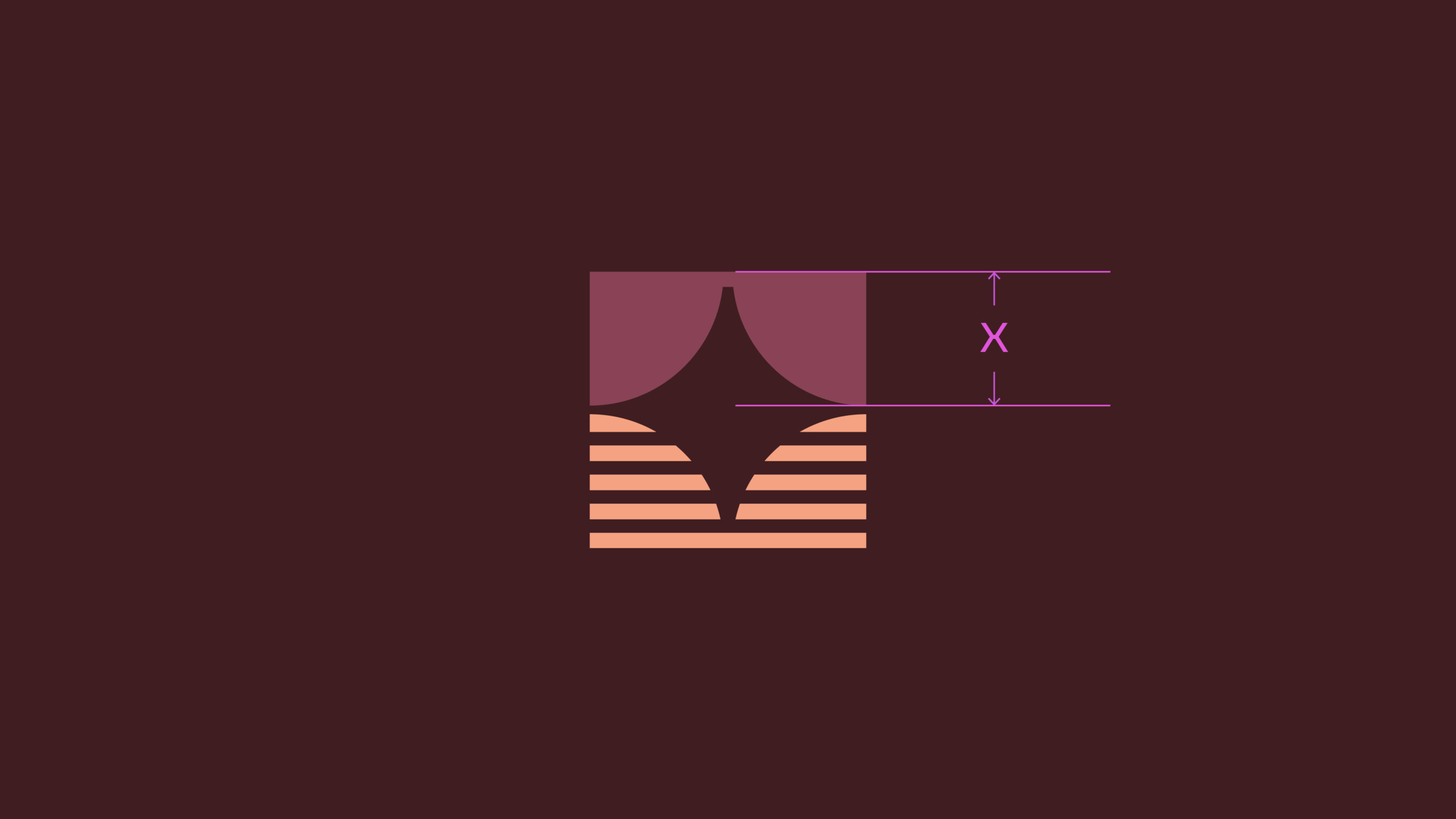
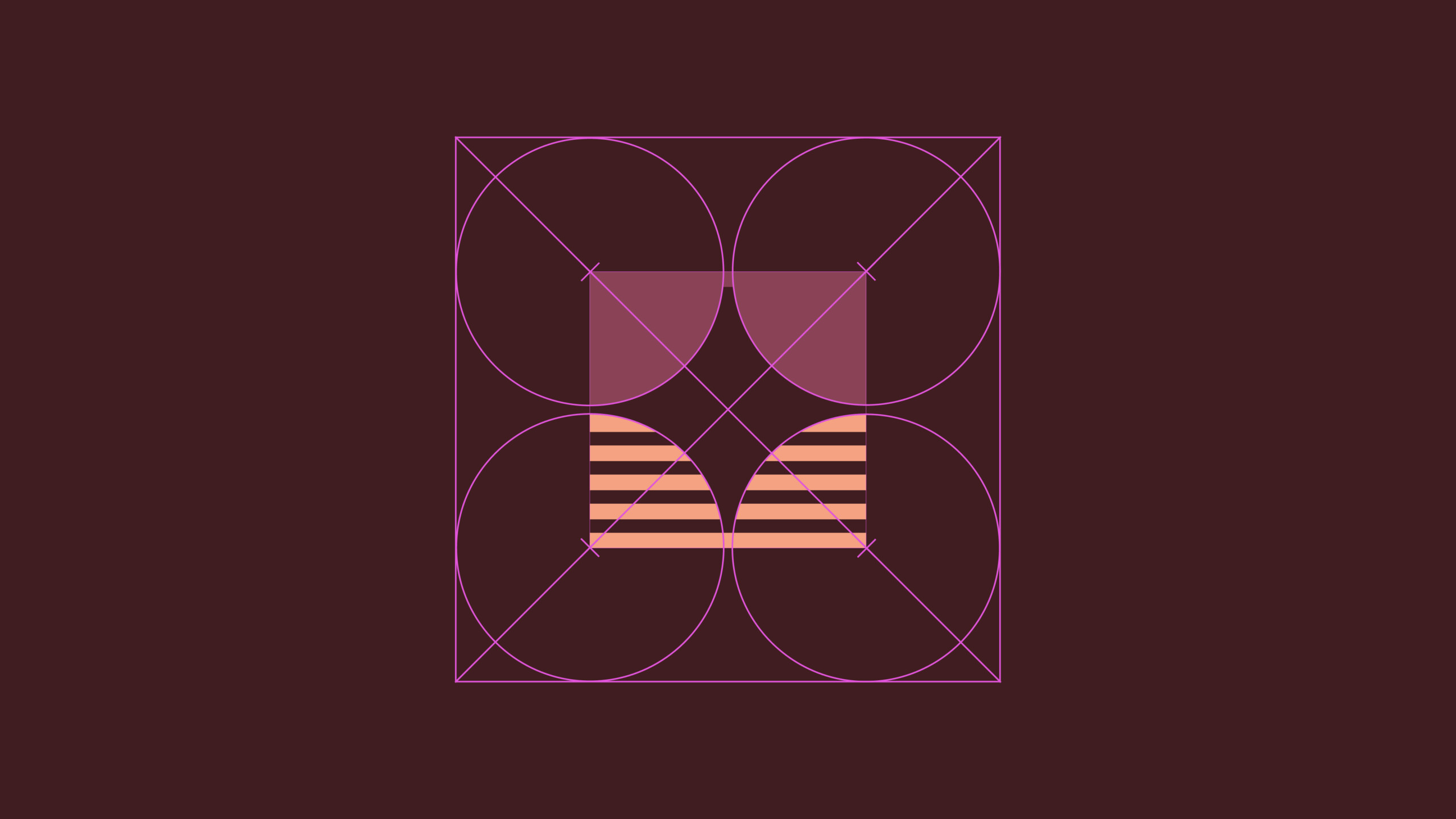
Clear space rule is set based on using a single quarter circle component from the brand icon itself, and is set equally around each side of the icon.
The clear space rules can be reduced further when using in digital applications particularly when it is being featured as fav icon or profile image.
Minimum Size
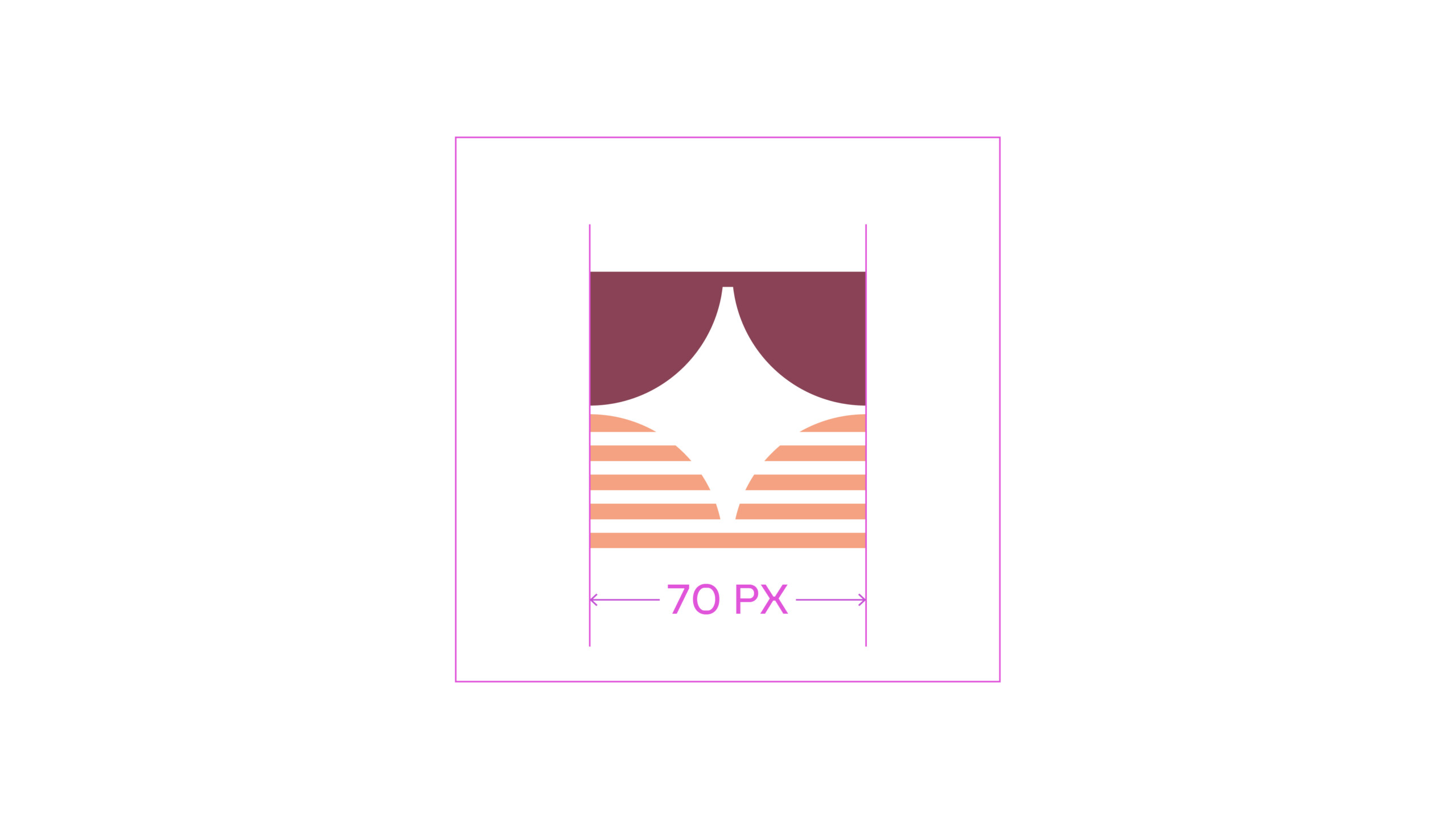
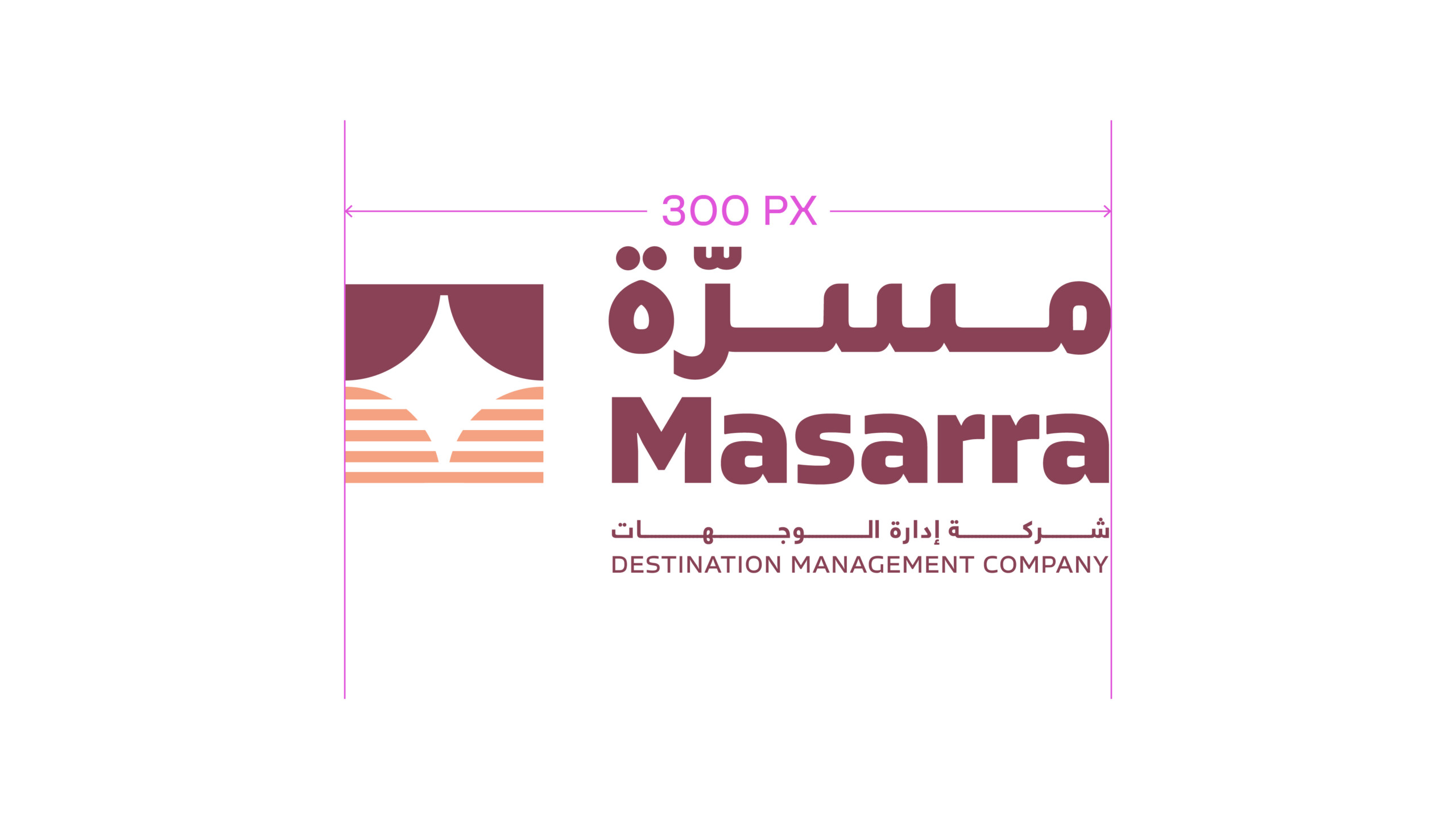
The minimum width for the icon is set at 70px on a 227dpi size screen and should never be featured at a smaller size. This ensures the legibility of the brand icon is always maintained.
Usage
The brand icon should be avoided being over used, and not feature in the same substrate or screen wherever the full brandmark is featured.
In digital applications, both brandmark and brand symbol use should be avoided whenever possible – unless it is a function of a particular application. For example the icon featuring in the browser bar, with the full brandmark featured on the website is permitted.



Wordmark
The Masarra word mark can be used independent of the Masarra brand icon. This should only be implemented sparingly in special-use applications OR space restrictive applications only.
Some example of use-cases maybe a specific component of brand stationery such as the word mark on a Pencil, or a component element of a VVIP application.
Latin Wordmark
Arabic Wordmark
Dual language Wordmark
Special-use brandmark
Small size use only
There may be occasions where greater prominence needs to be drawn to the brand descriptor line of Destination Management Company. This version should ONLY be used in space restrictive applications to ensure better legibility for the descriptor line.
Special-use Brandmark
Secondary Arabic Brandmark
Usage rules
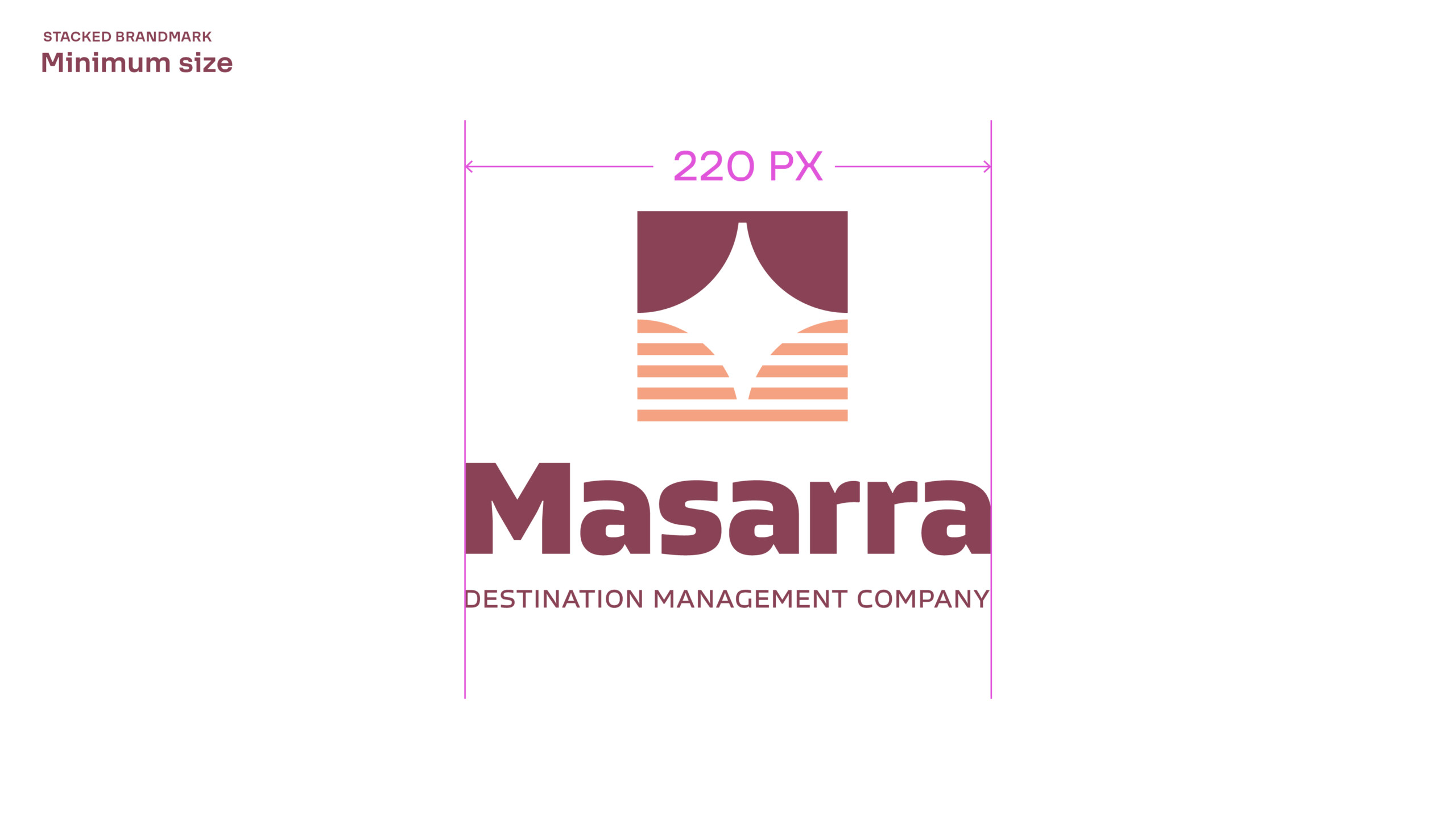
Minimum Size
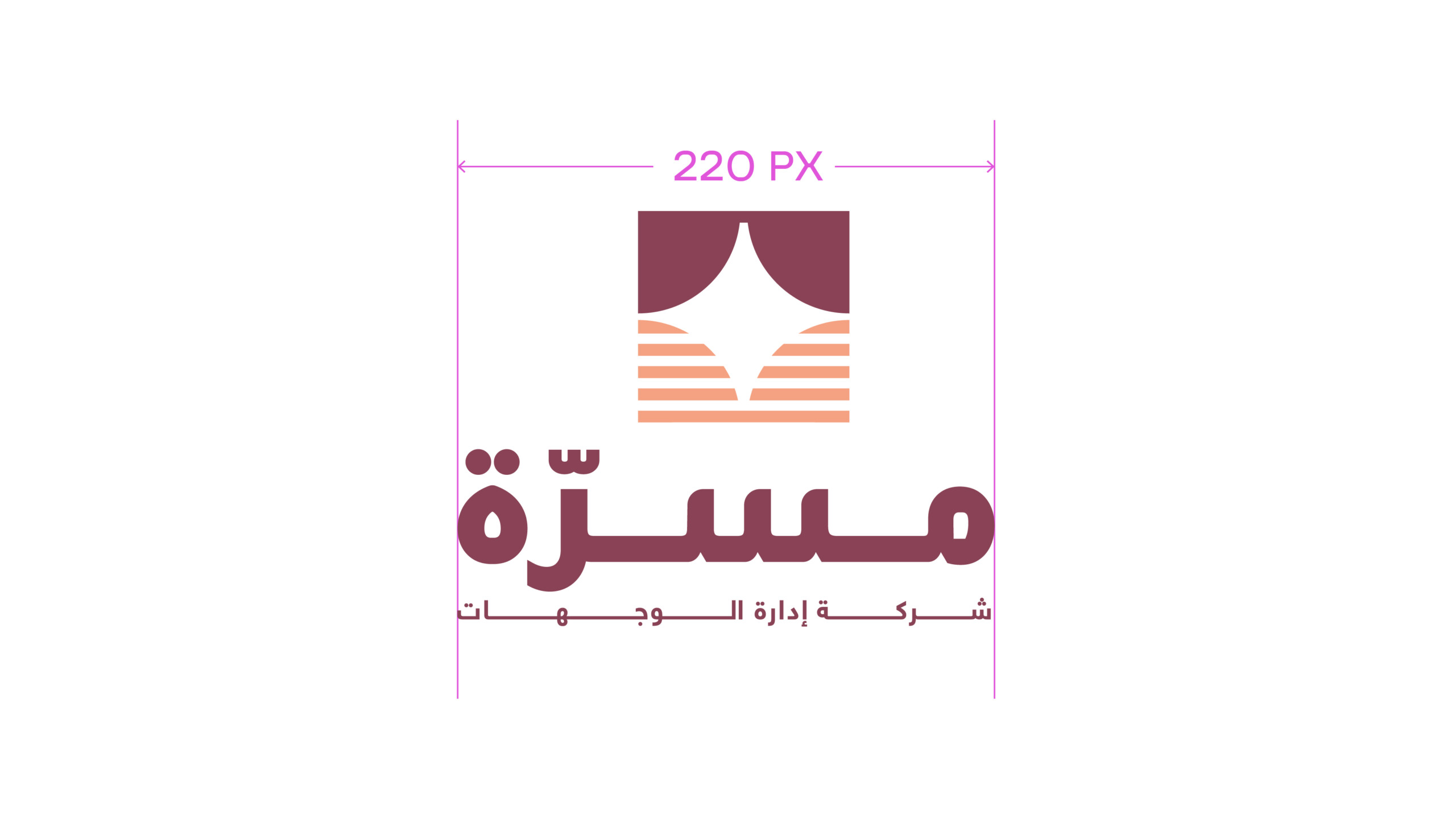
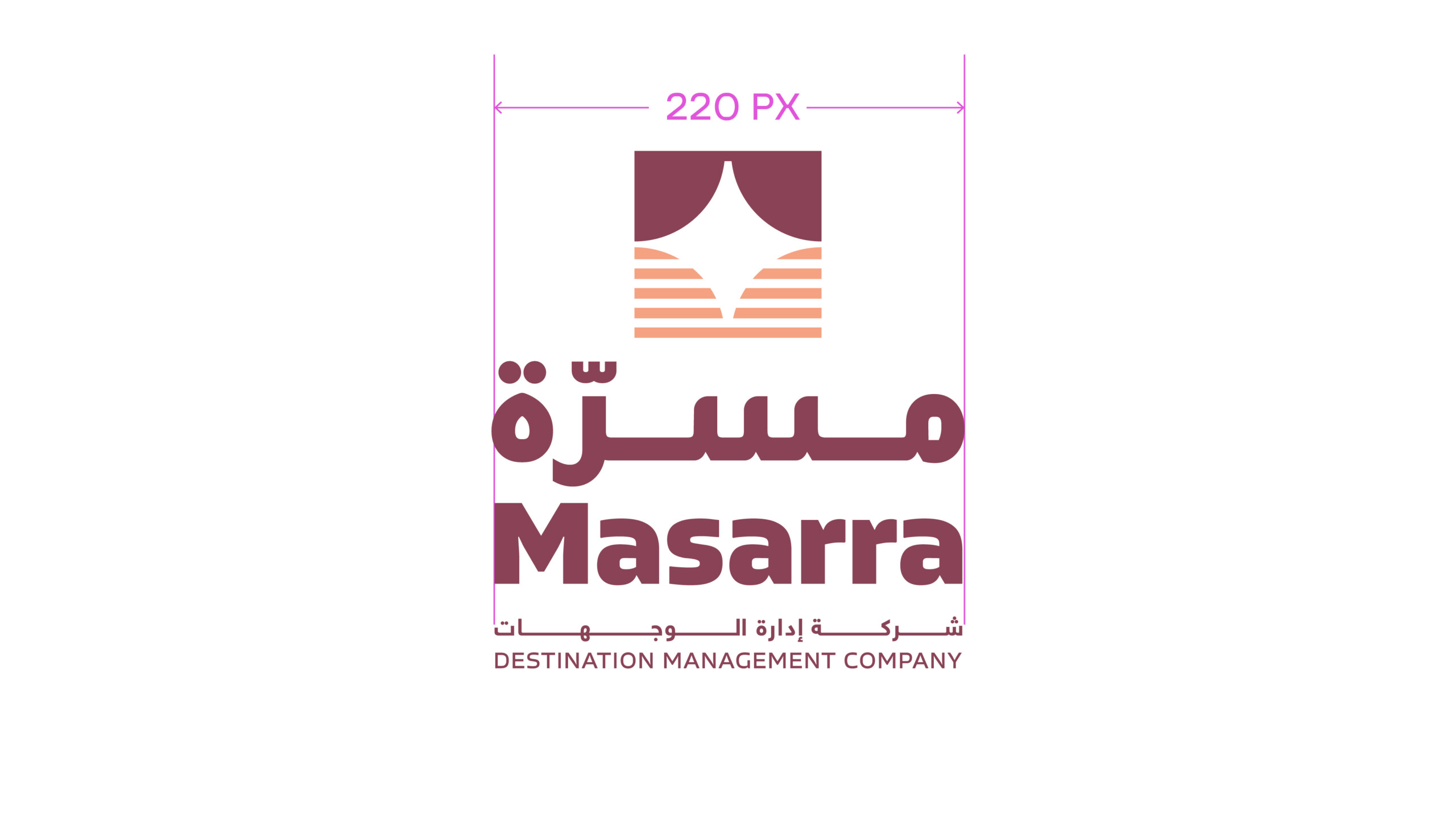
The minimum size rules should be adhered to strictly. This will ensure the Masarra brandmark is always legible across all applications. Visuals not shown to scale.
Clear Space
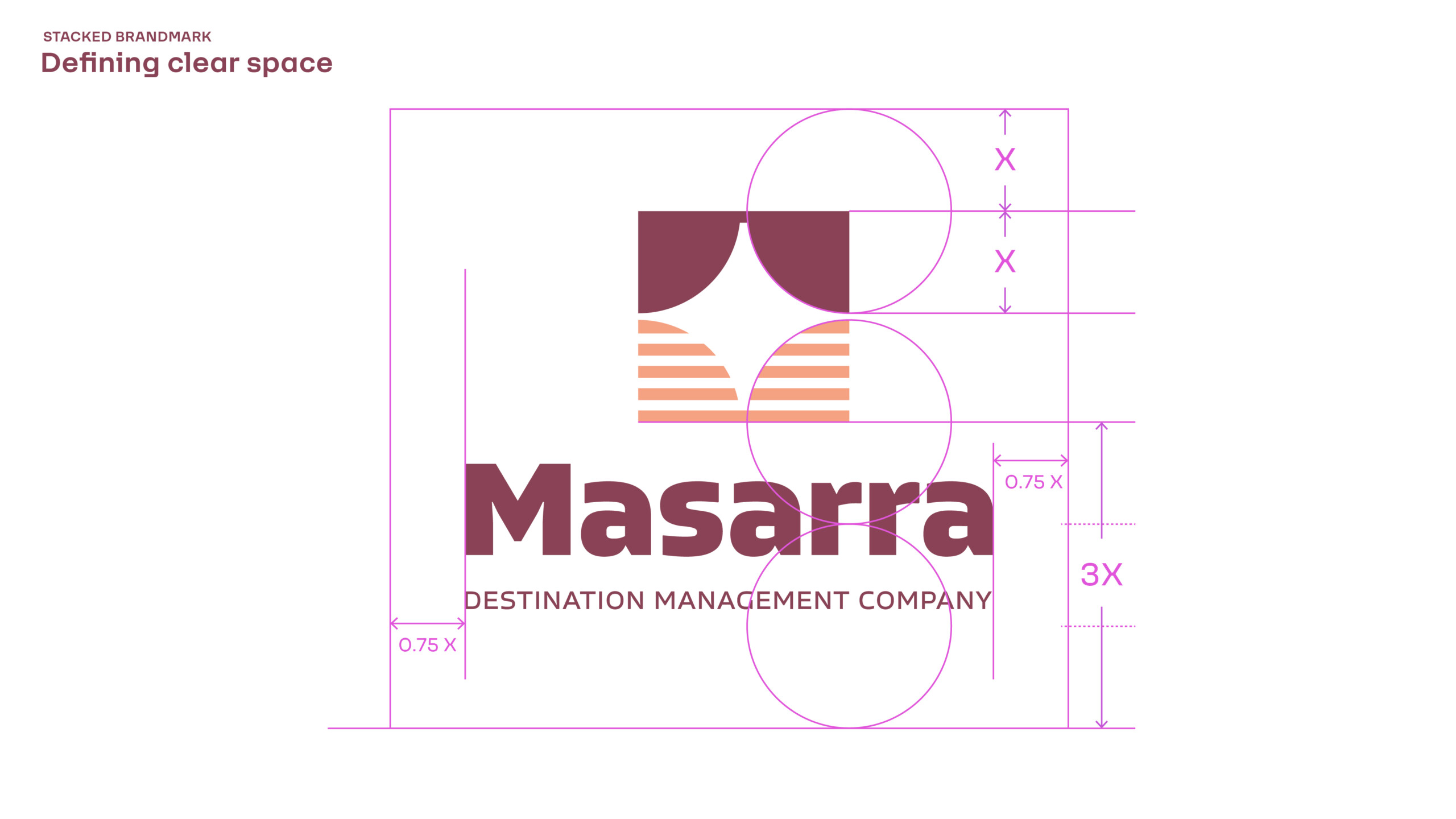
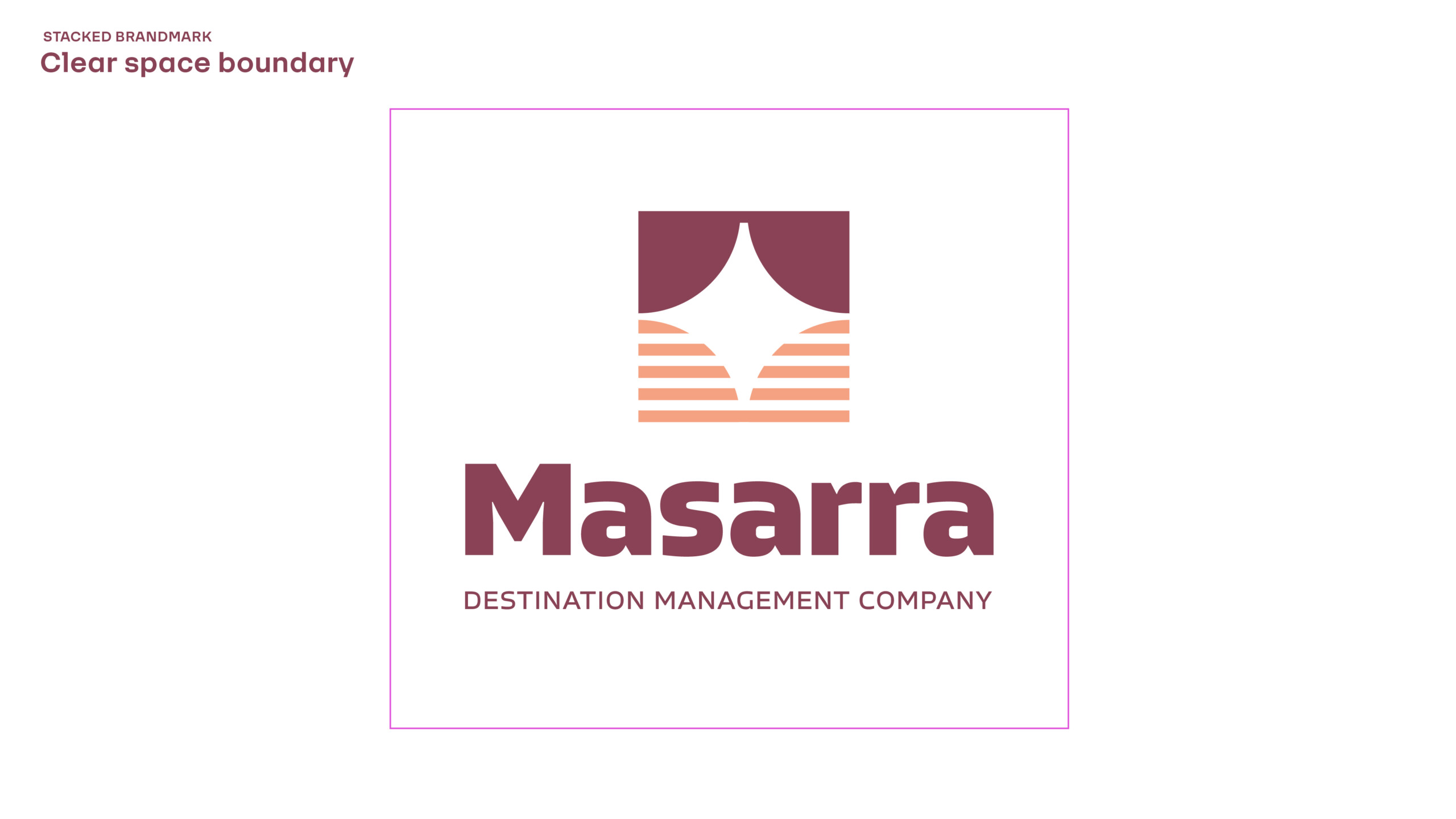
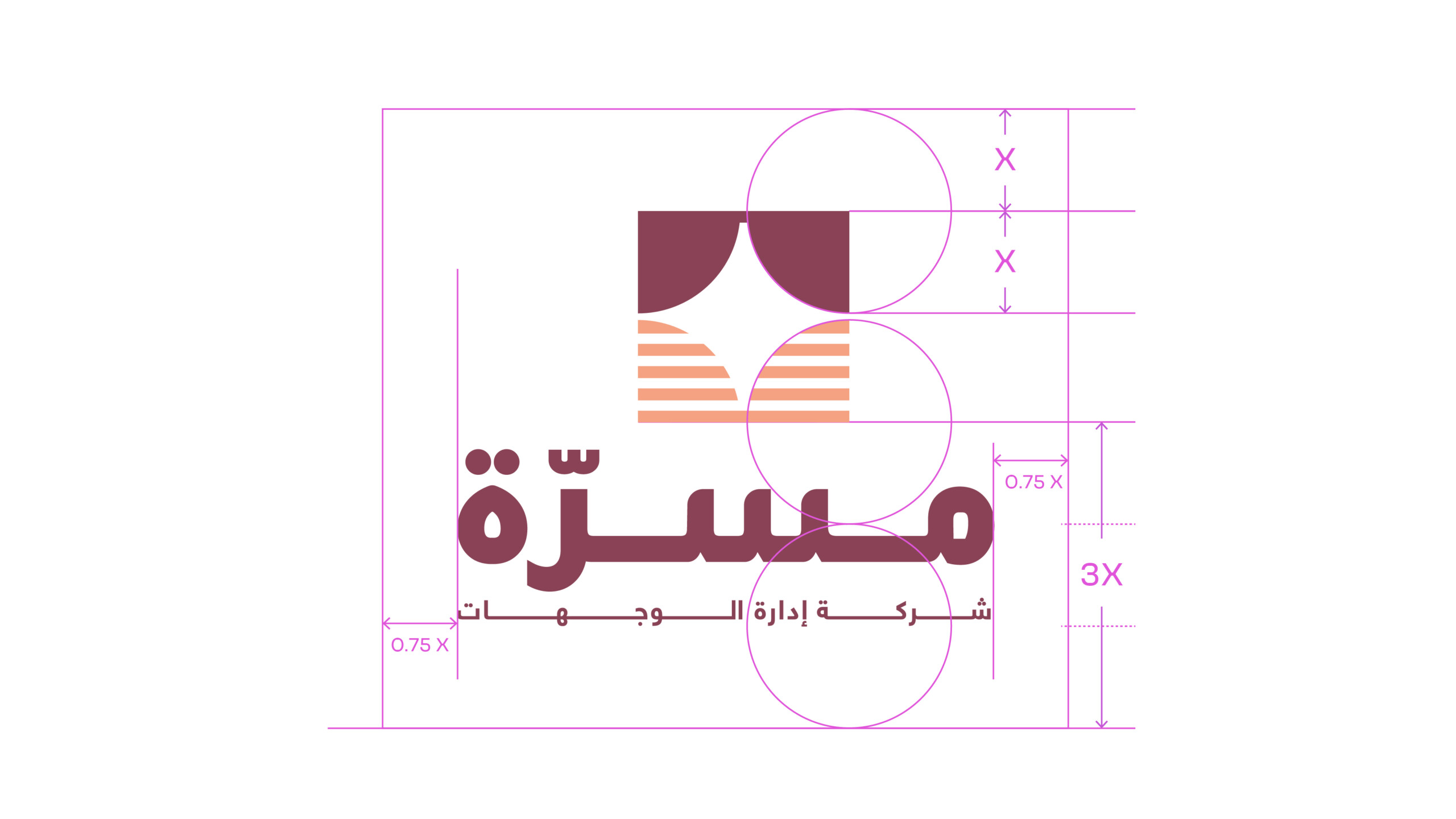
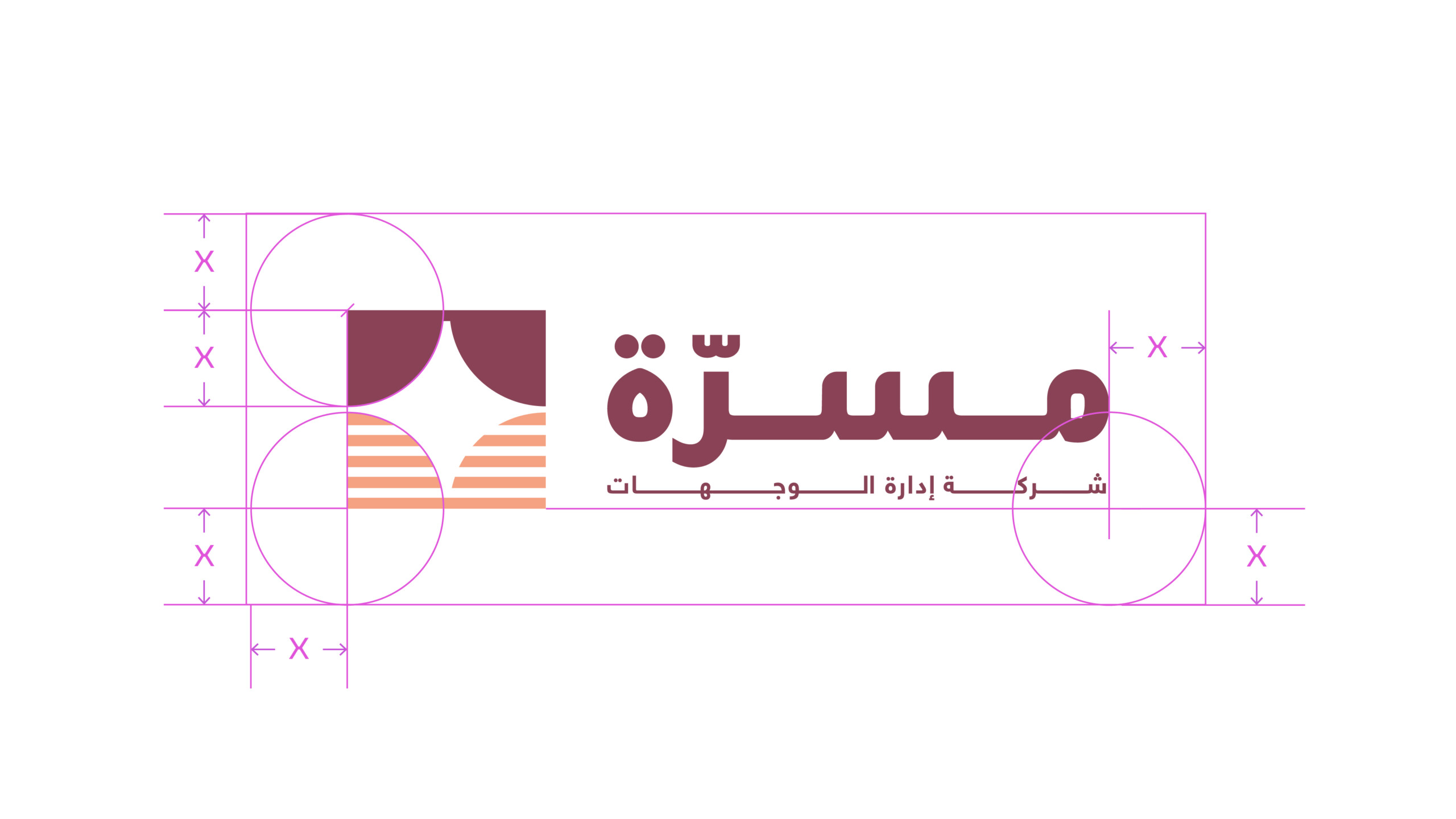
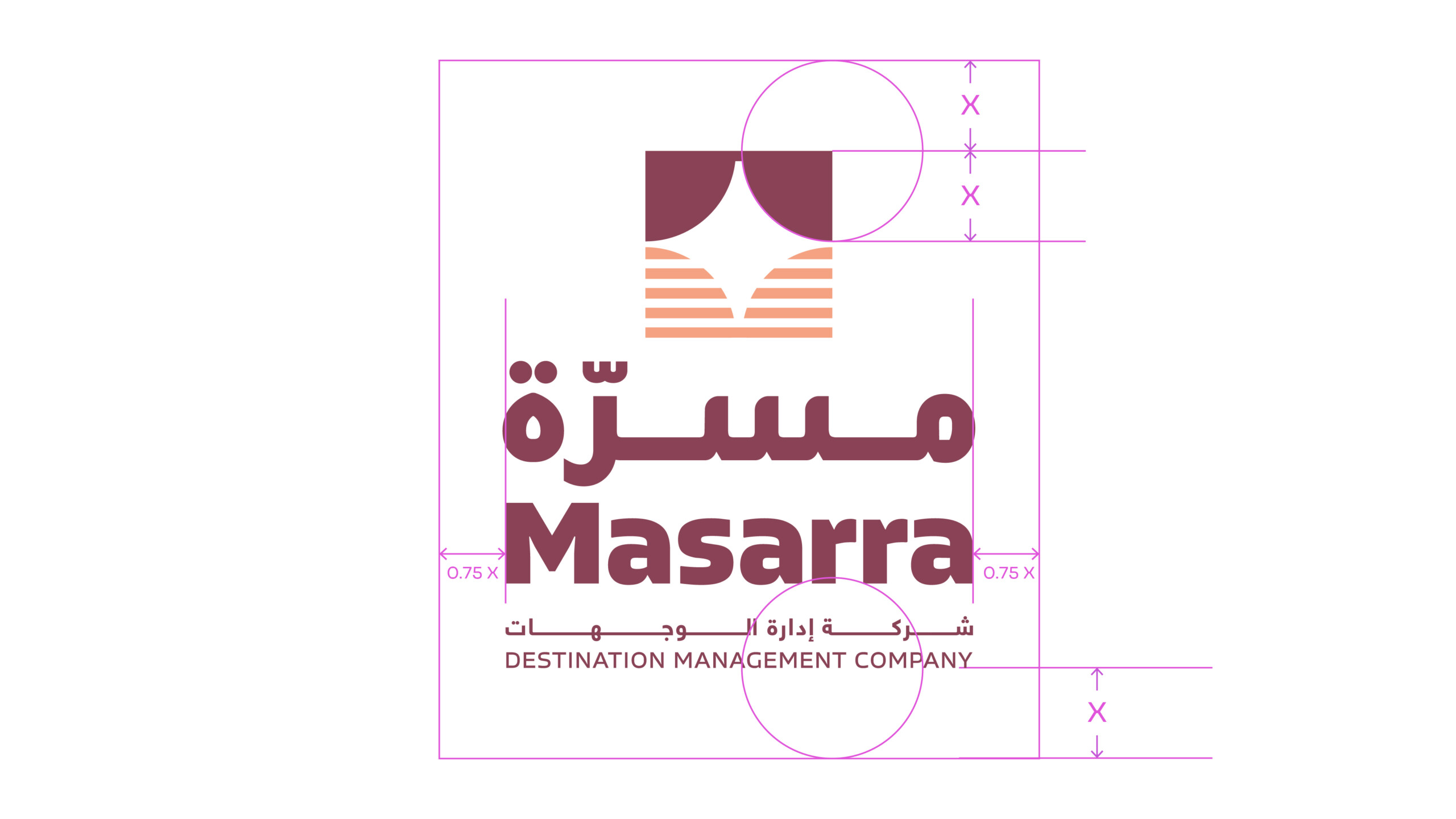
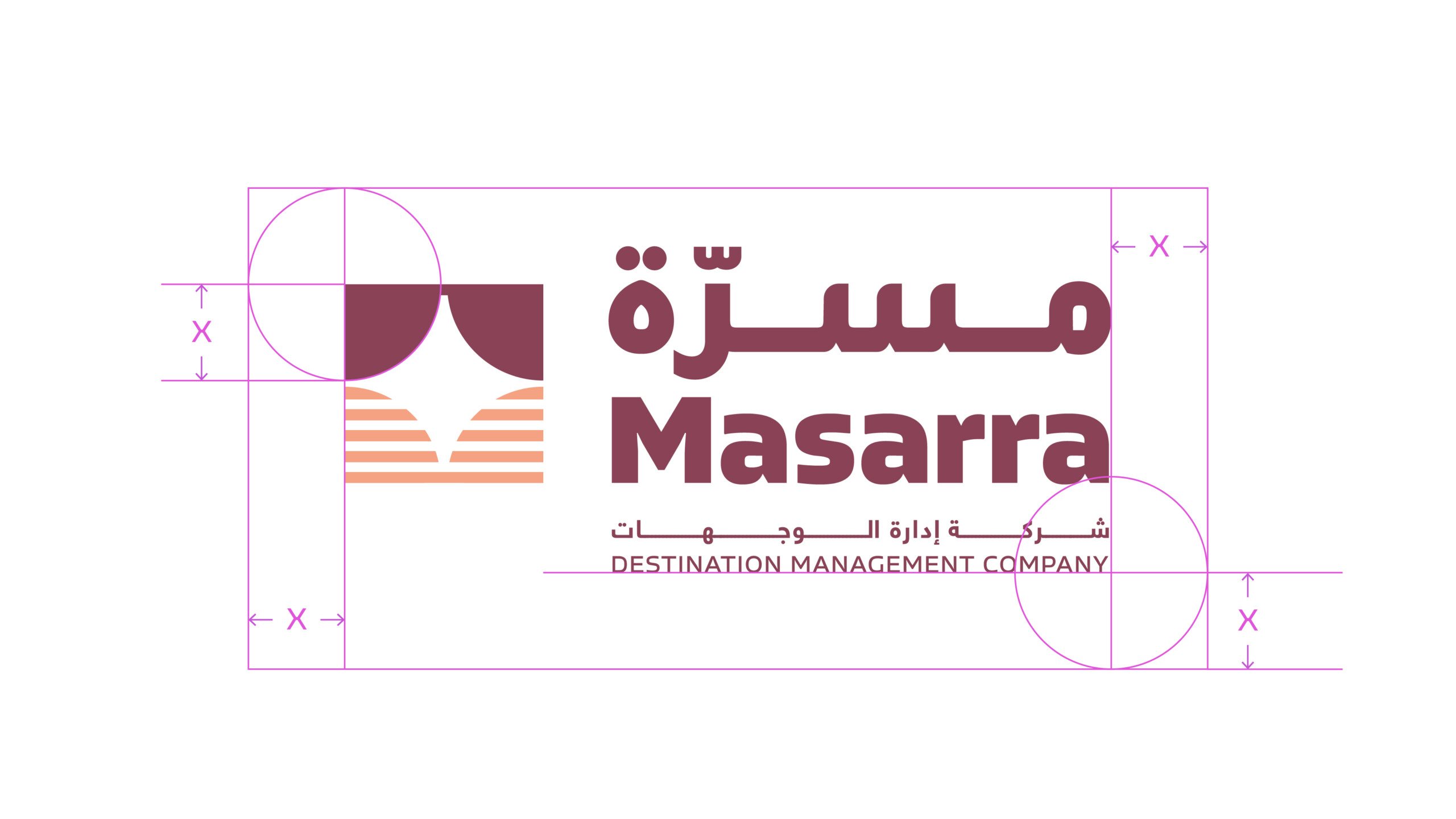
Clear space is equal to the x-height of the upper segment of the brand symbol  and should be adhered to strictly whenever possible. The following is a breakdown of the clear space required around each brandmark variant.
Defining Clear Space
1. The x-height of the top half (quarter circle) of the brand symbol is used to determine the clear space.
2. The clear space at top of the brandmark is equal to a x1 x-height.
3. The clear space at left and right of the brandmark is equal to a x0.75 of the x-height.
4. The clear space at the bottom of the brandmark is equal to x3 x-height from the bottom edge of the brand symbol.
Usage: Latin brandmark
Usage: Arabic brandmark
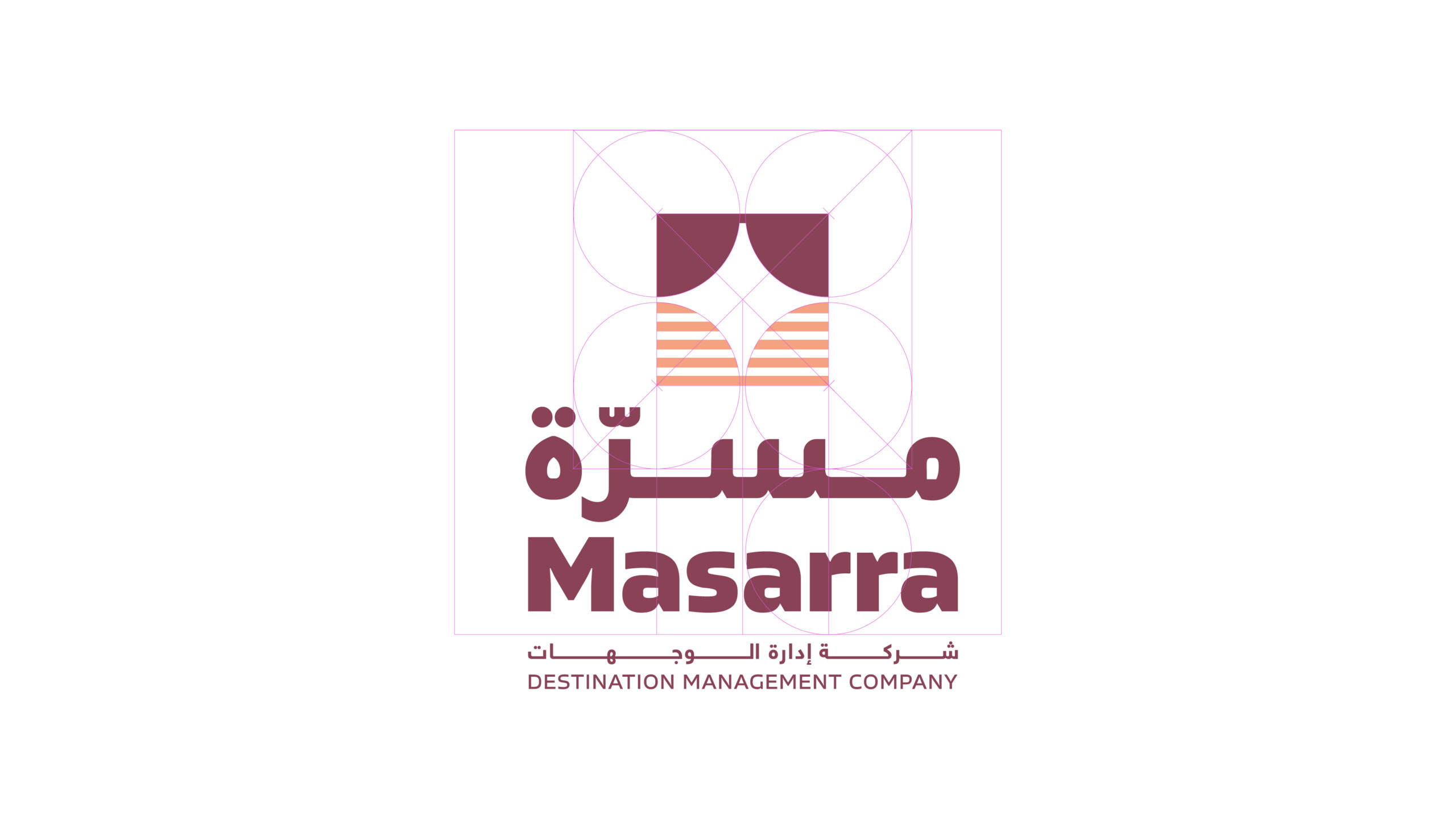
Usage: Dual language brandmark
Brandmark don'ts
Below are a some examples of what not to do with the brandmark. Always ensure brand marks are taken from the approved artwork file, and never adapt the brandmark in any manner with the exception of resizing the brandmark always with the proportions locked.
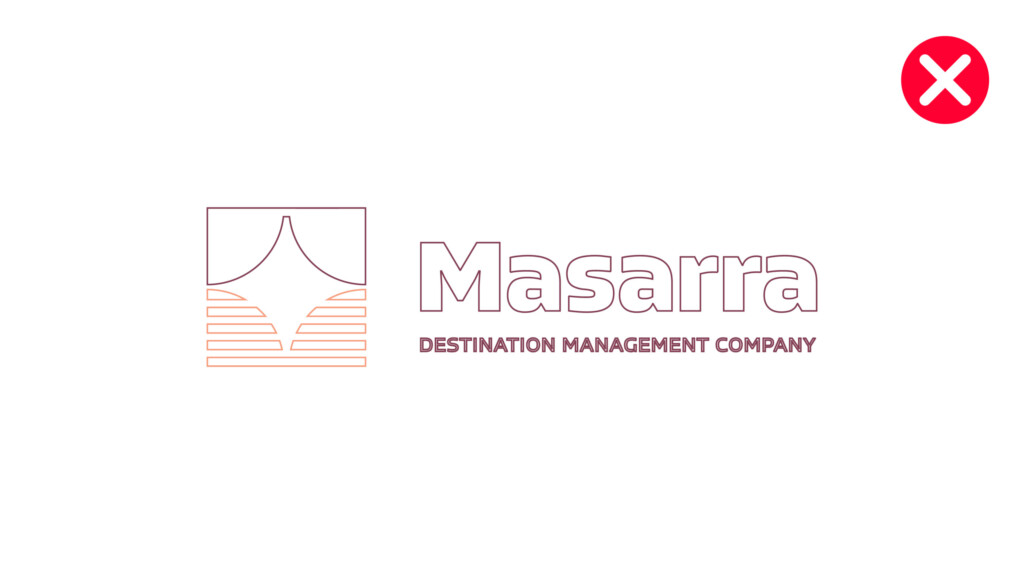
Do not outline the brandmark
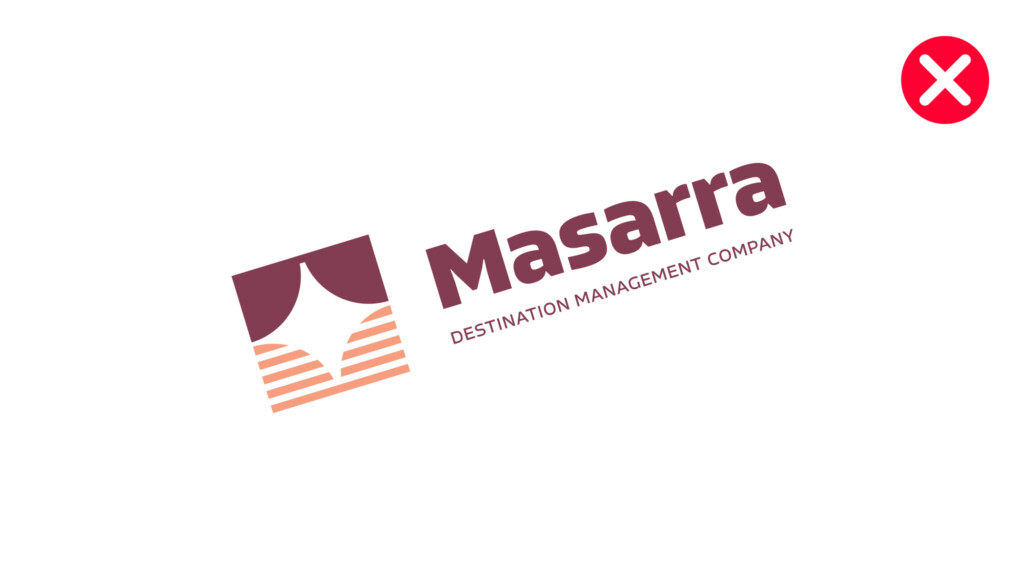
Do not implement the brandmark at an angle
Do not add visual elements
Do not re-arrange the brand icon
Do not add shadows or effects to the brandmark
Do not condense, expand or distort the brandmark in any manner, nor resize out of proportion
Do not alter the wordmark orientation, size or relationship with the brand icon
Do not recolour the brandmark in any manner
Do not skew the brandmark
Do not alter the colouring of the brandmark
Do not alter the colouring of the brandmark
Do not use single colour brand marks other than the approved variants
Do not create new typography for the Masarra wordmark
Do not apply graduated tones to the brandmark
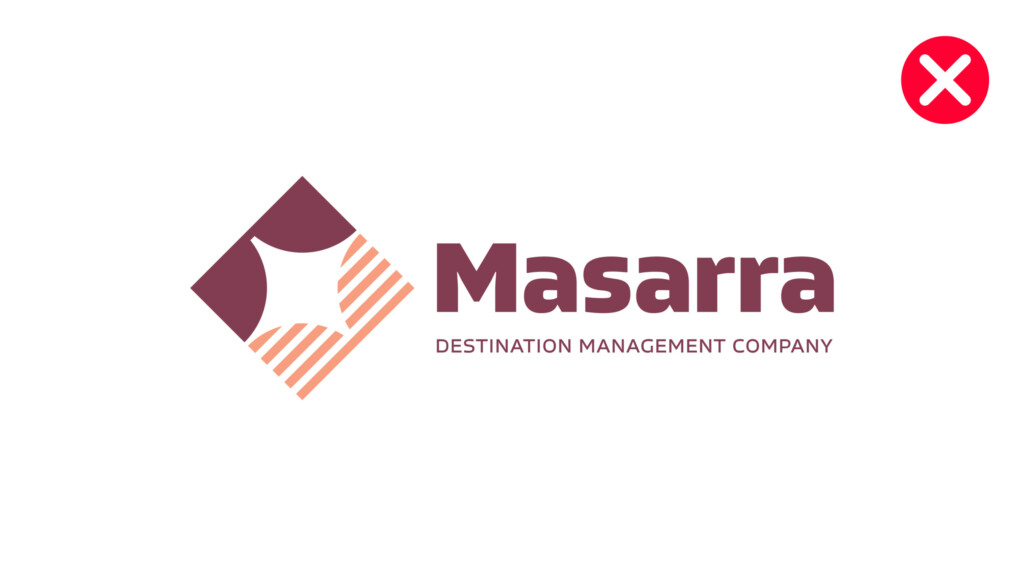
Do not rotate the orientation of the brand icon
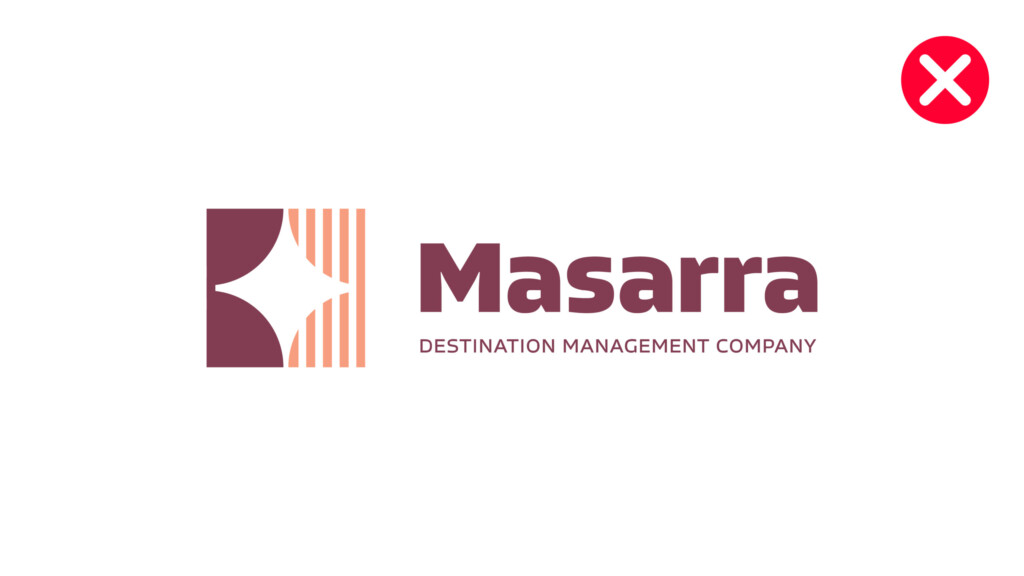
Do not rotate the orientation of the brand icon
Brandmark placement
The Masarra brand does not have any restrictions on how the brandmark is positioned within a canvas, object or any form of brand marketing or merchandise.
However it is ALWAYS important to optimise the positioning of the brandmark on a case by case basis.
As a general rule the brandmark should be positioned at either of the top, or bottom corners – on the idea that the location is the most optimised for each specific application.
This naturally is a flexible rule as non-standard applications may require positioning the logo, off centre or aligned based on other external components – for example positioning the brandmark on shirt pocket, or on vehicle livery.
Always ensure clear space is adhered to, the brandmark is legible at the size implemented.
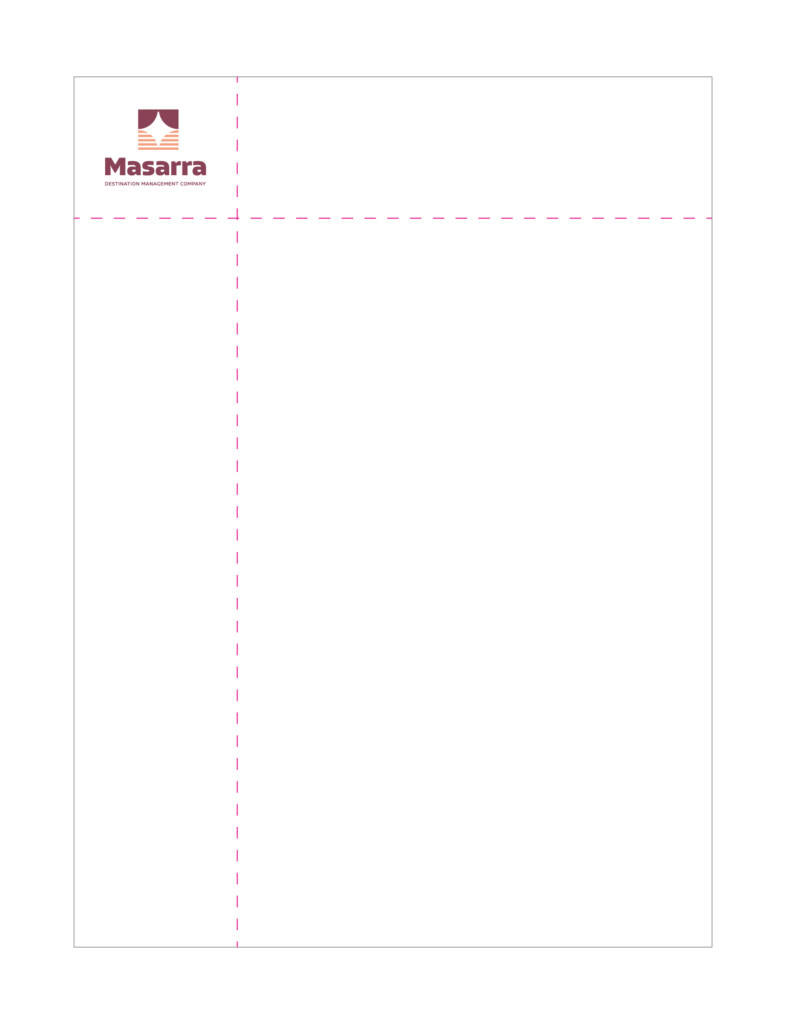
Positioned top left
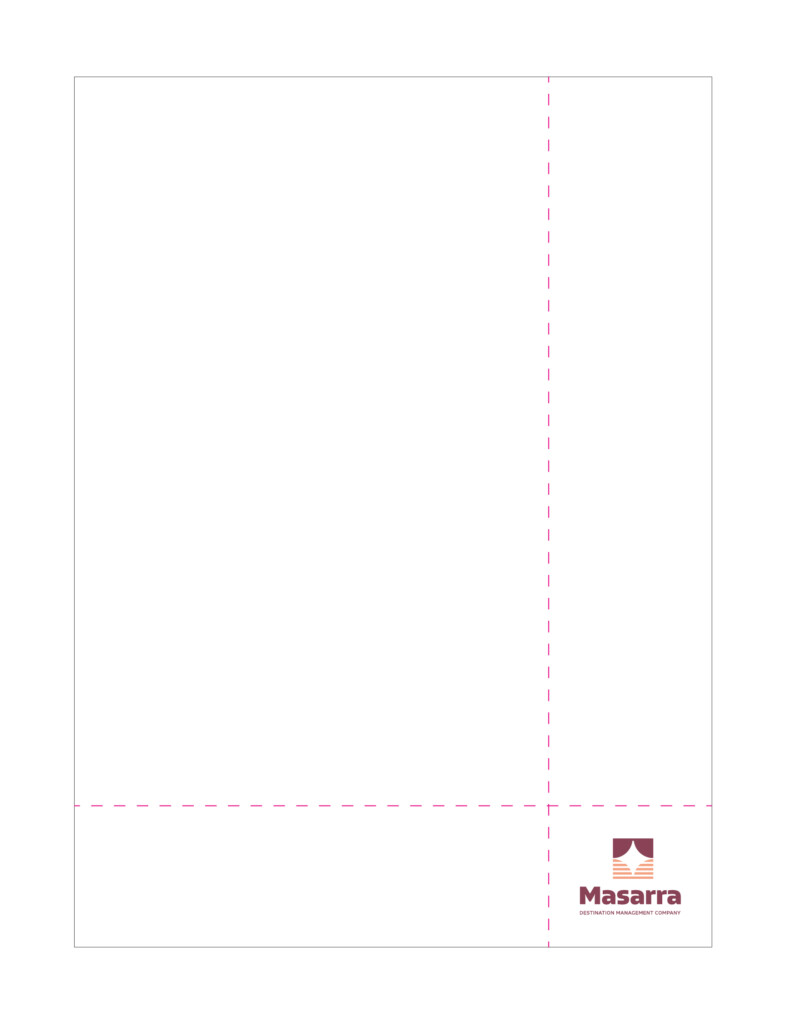
Positioned bottom right
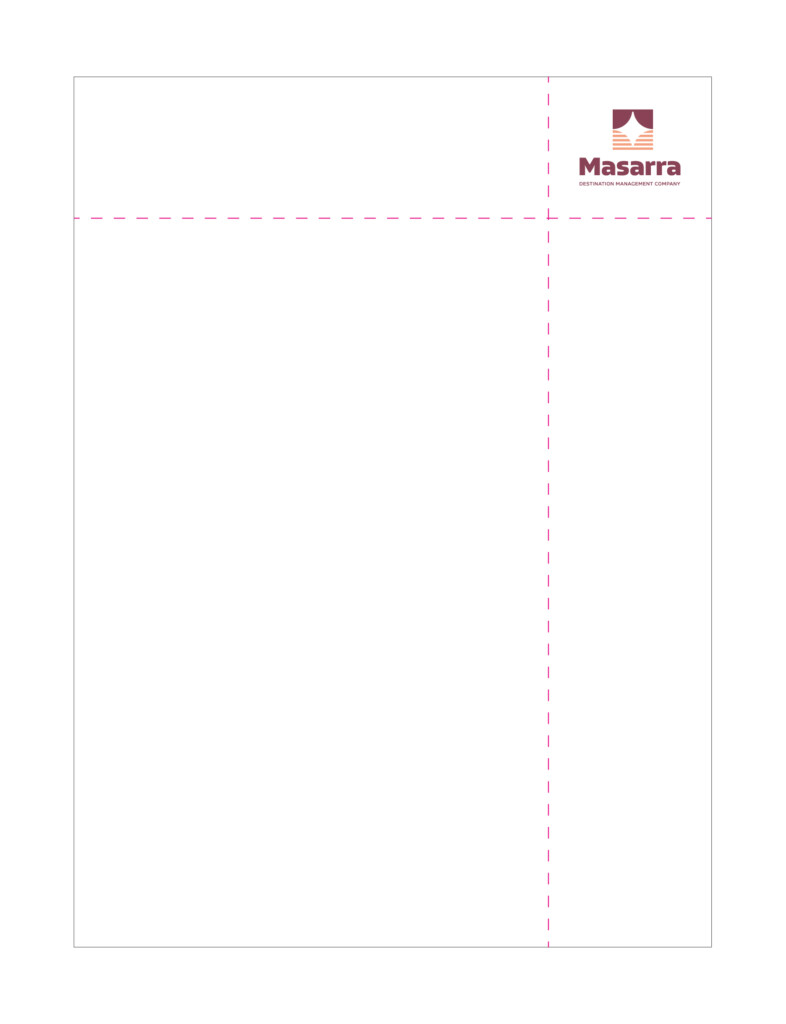
Positioned top right
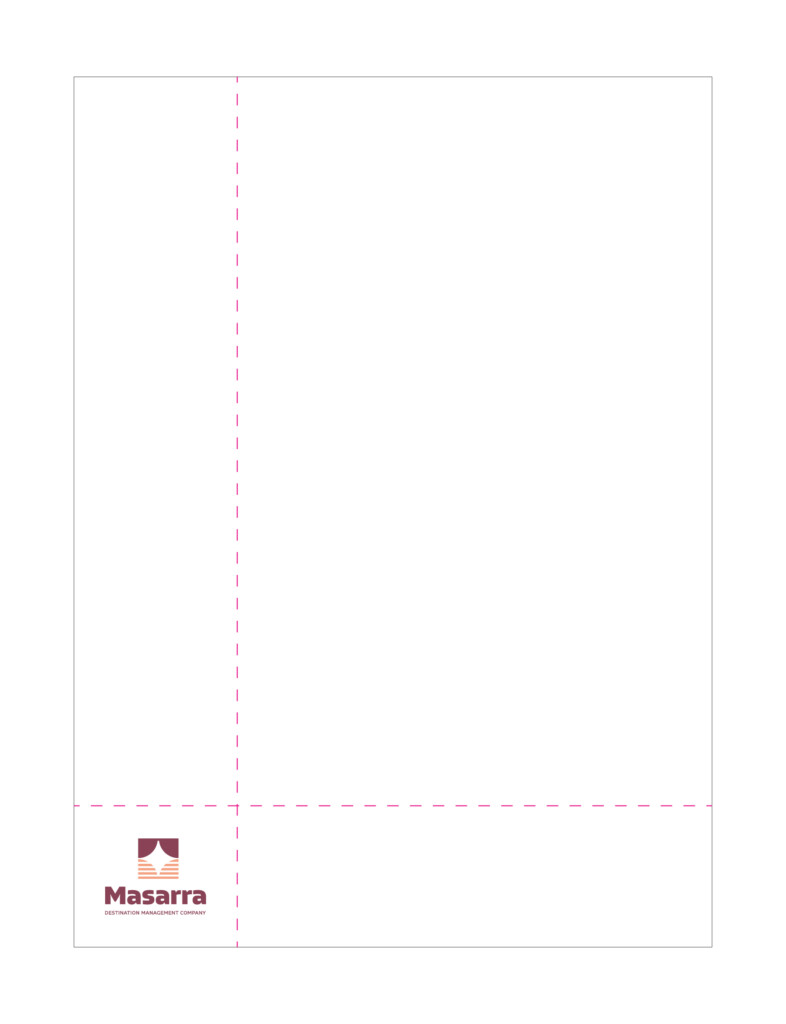
Positioned bottom left
Brandmark alignment points
The following is a basic guide to how the brandmark should be aligned with additional brands in co-branded situations. It is important to note that this is just a guide and aesthetic judgement should be used to ensure that co-branded entities have equal or the corresponding level of brand presence required in relationship to the each other brand.
Situation dependant either of the stacked or horizontal brandmark can be used.
For example IF the majority of brands have a horizontal format brandmark, then the Masarra horizontal brandmark should be utilised, with the same rule applying to the stacked brandmark version.

Vertical alignment guides
Brandmark - Stacked

Horizontal alignment guides
Brandmark - Stacked
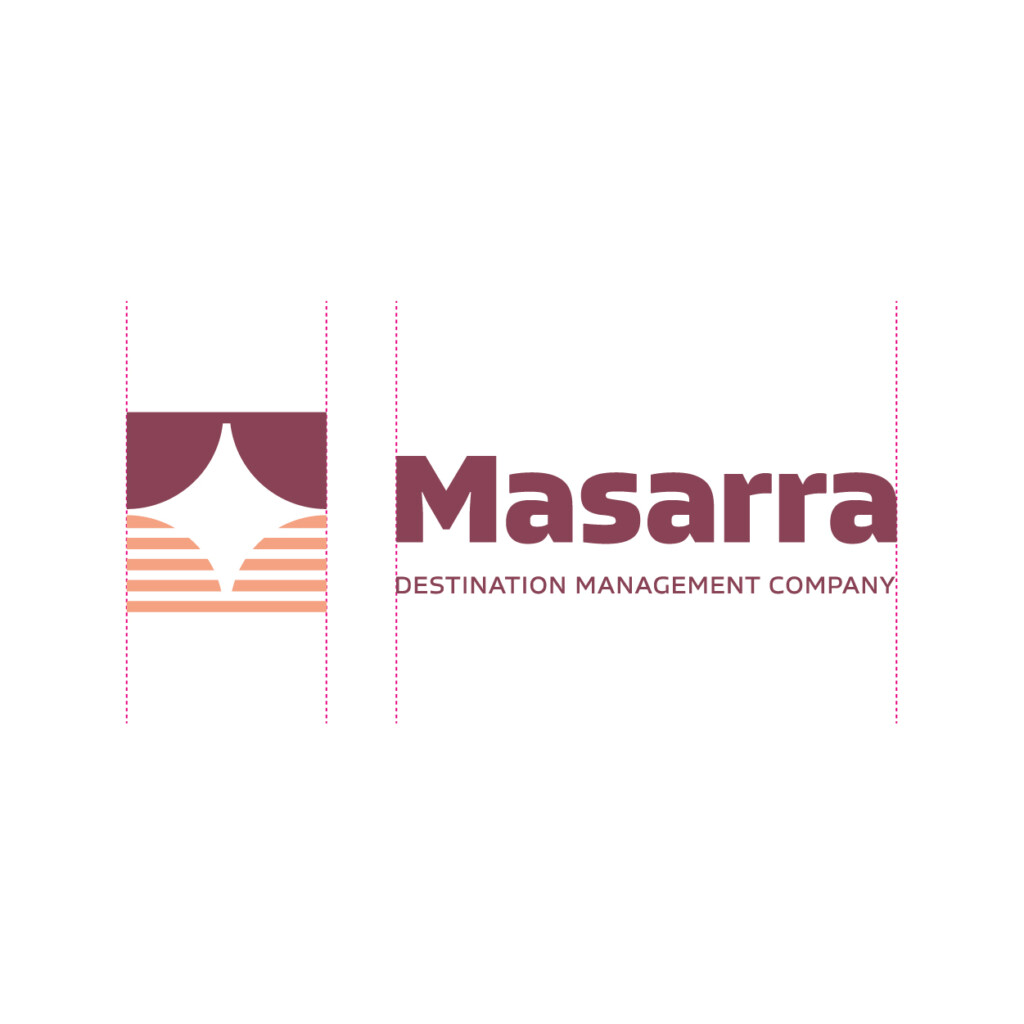
Vertical alignment guides
Brandmark - Horizontal

Horizontal alignment guides
Brandmark - Horizontal
Examples of alignment points
Stacked brandmark alignment
The following are a selection of examples on how the brandmark should be positioned, and sized based on these alignment points. These examples are based on a 50/50 co-branded relationship.
The alignment points to be used should be selected based upon creating the most optimal layout within the application the brands are featured on.
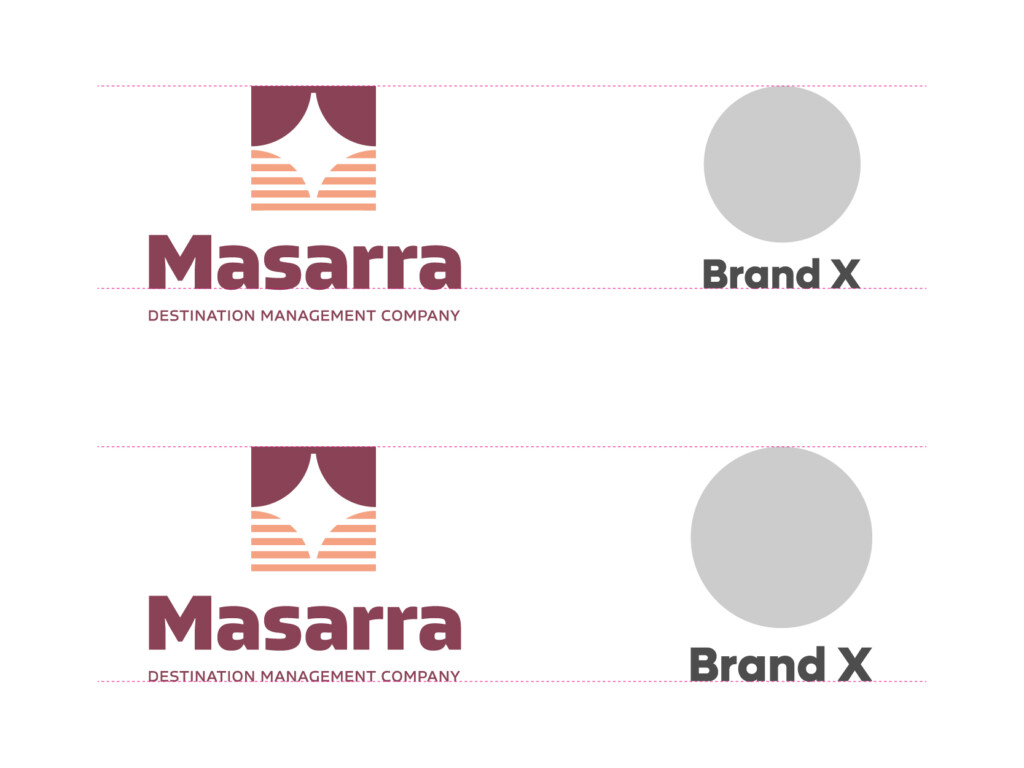
Stacked brandmark arranged horizontally
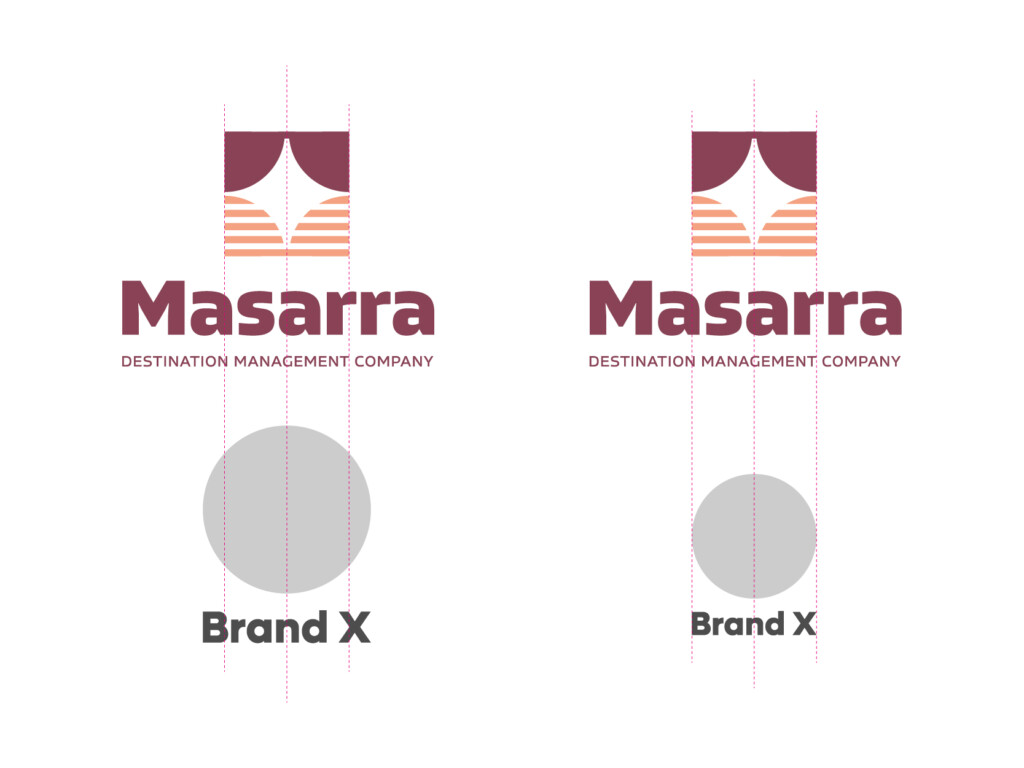
Stacked brandmark arranged vertically
Horizontal brandmark alignment
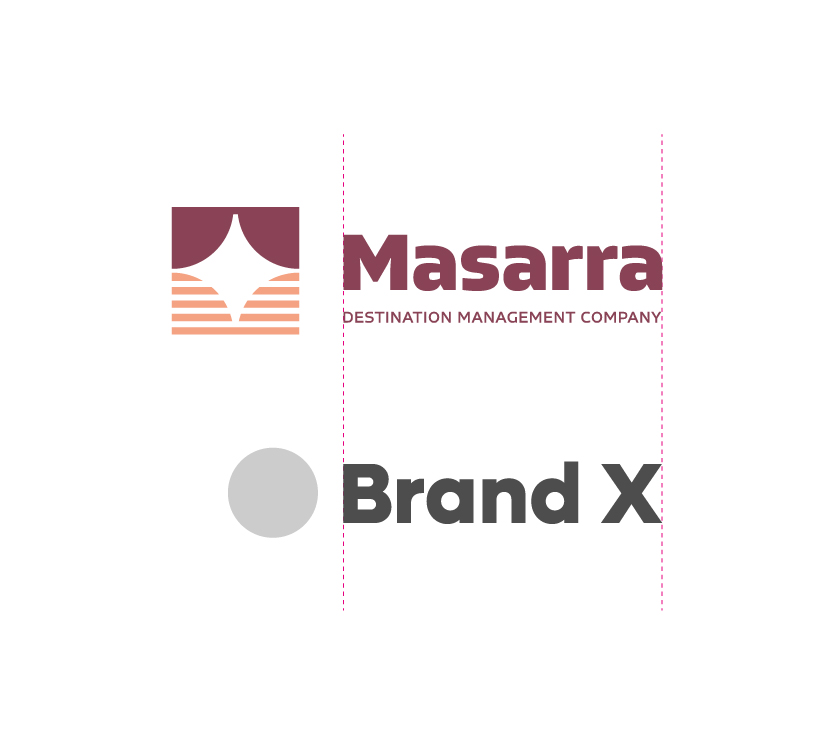
Aligned vertically with wordmark width
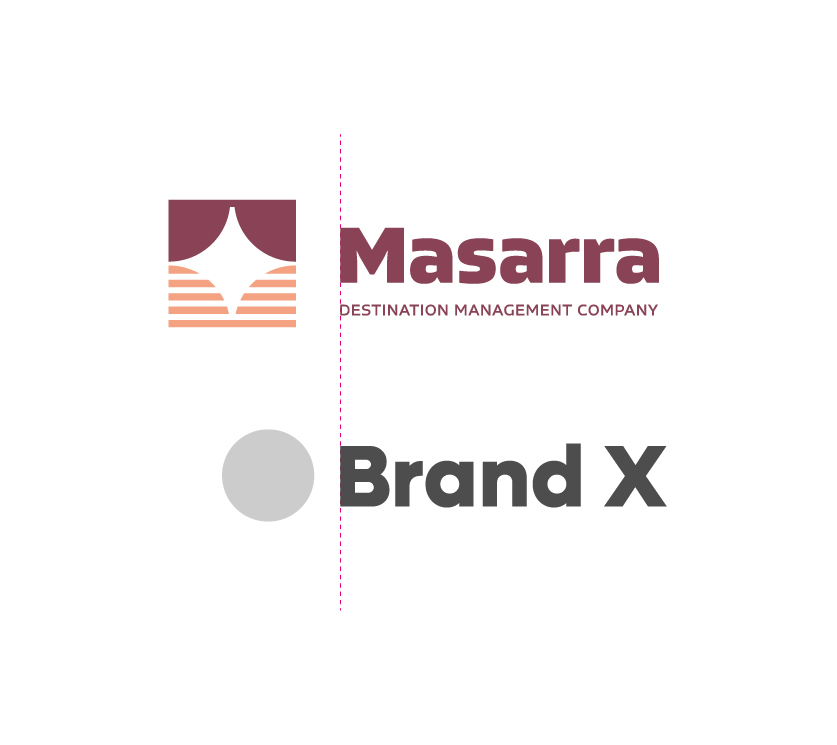
Aligned vertically with left of wordmark only
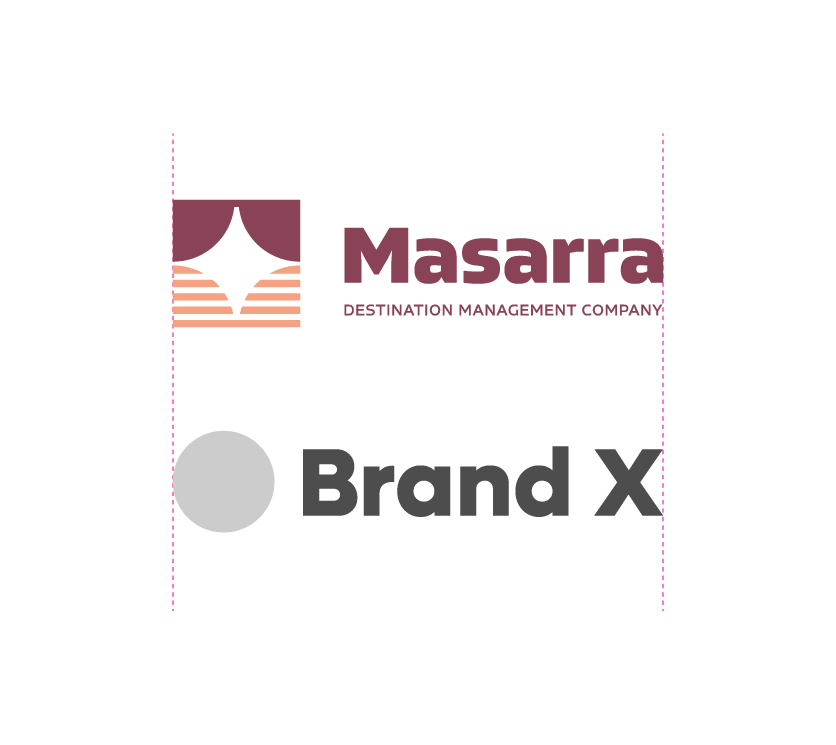
Aligned vertically at full width
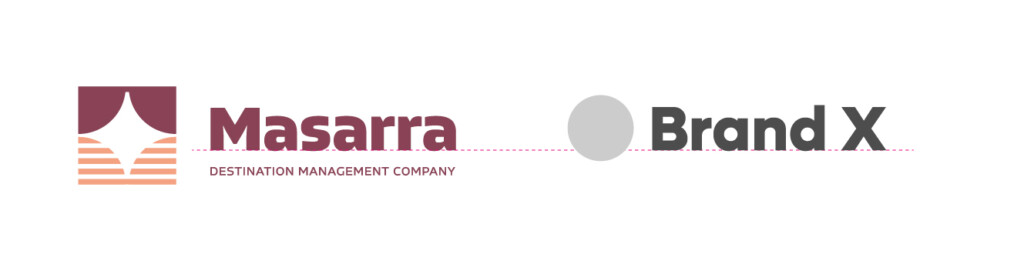
Aligned horizontally with baseline of wordmark
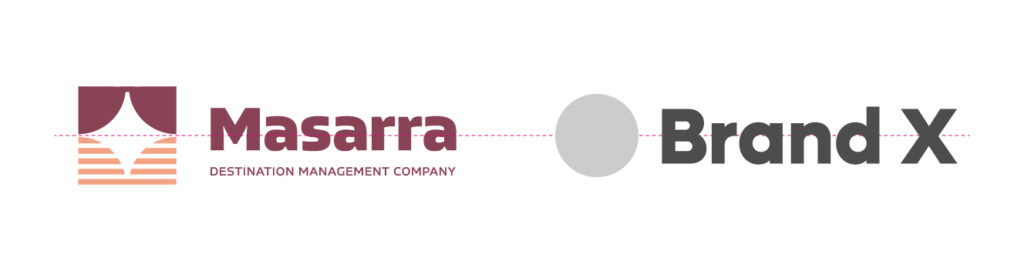
Aligned horizontally with centreline of brandmark
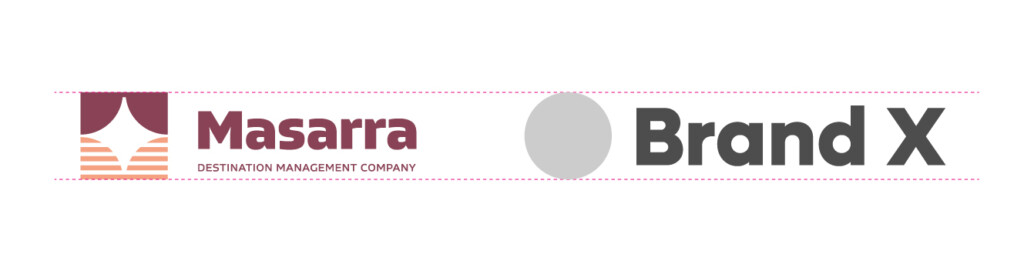
Aligned horizontally with full height of brandmark
Colour palette
The following is the brand colour palette for Masarra and a guide to the ratio of colours that can be used across all brand applications. The ratios should be followed closely across the entirety of an individual application. Judgement should be used when additional impact or differentiation is required within an individual screen or section of a communication.
Rollover and click to download Adobe Illustrator Swatch File.
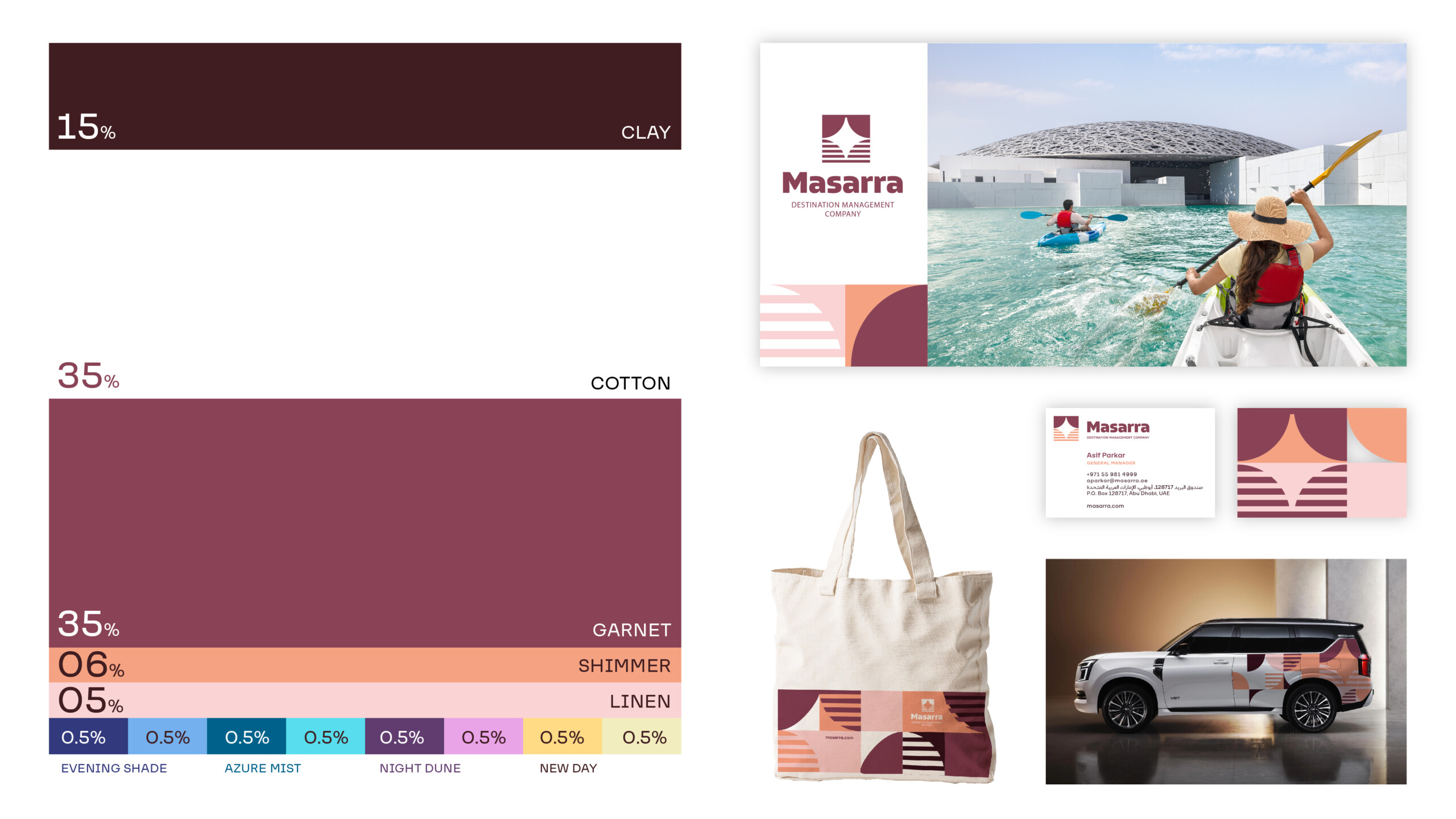
Primary palette
Clay
#331a21
C 54. M 84. Y 74. K 70
4975 C
Garnet
#804053
C 10. M 70. Y 25. K 50.
7642 C
Shimmer
#fc9e7e
C 00. M 46. Y 48. K 00.
1625 C
Linen
#f5ccc7
C 00. M 23. Y 12. K 00.
691 C
Cotton
#ffffff
C 00. M 00. Y 00. K 00
N/A
Tertiary palette
Evening Shade Dark
#373c7a
TBC
7687 C
Evening Shade Light
#88b0eb
TBC
278 C
Azure Mist Dark
#006289
TBC
633 C
Azure Mist Light
#8edded
TBC
304 C
Night Dune Dark
#583e6d
TBC
7665 C
Night Dune Light
#d8a3e6
TBC
2562 C
New Day Dark
#fbdb8a
TBC
1205 C
New Day Light
#f0edc0
TBC
7499 C
Typography
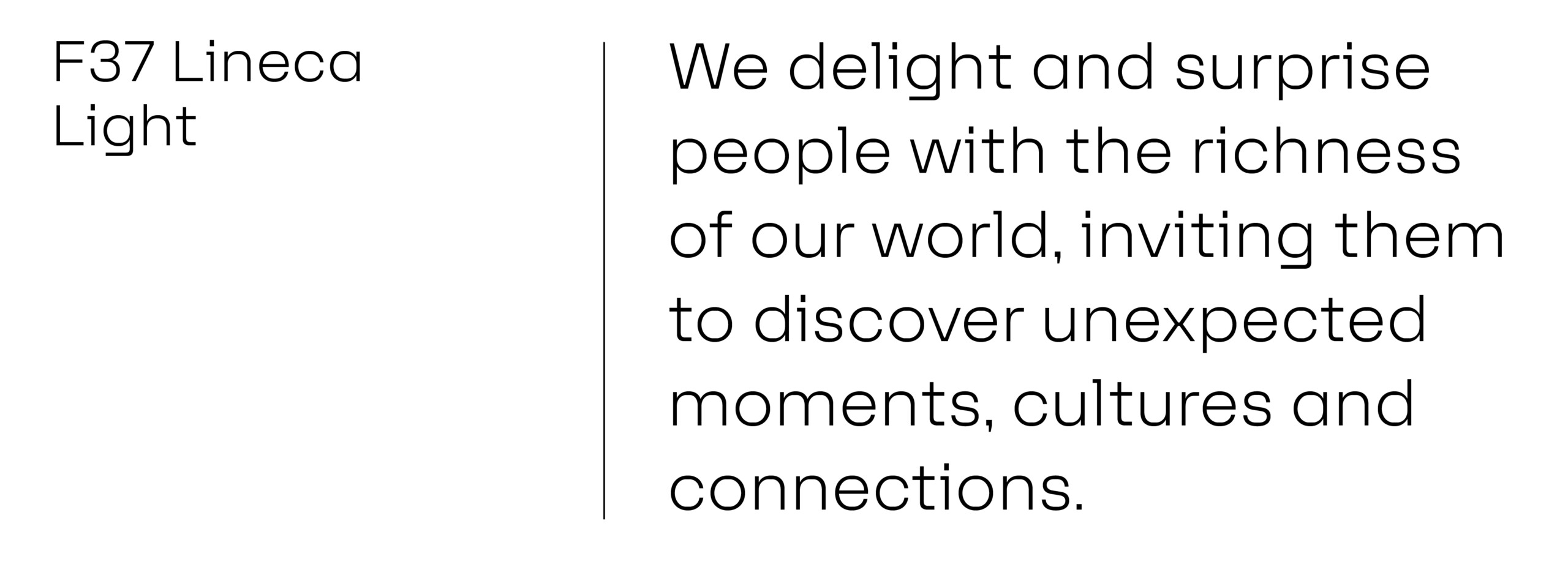
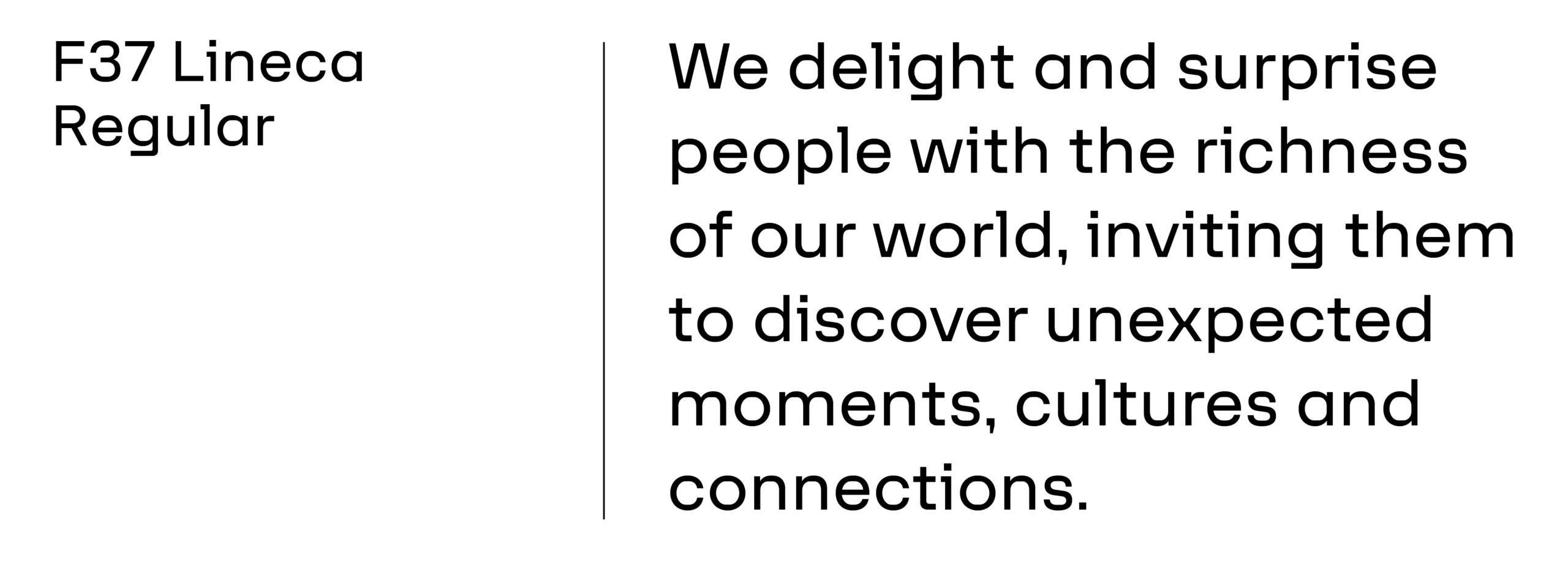
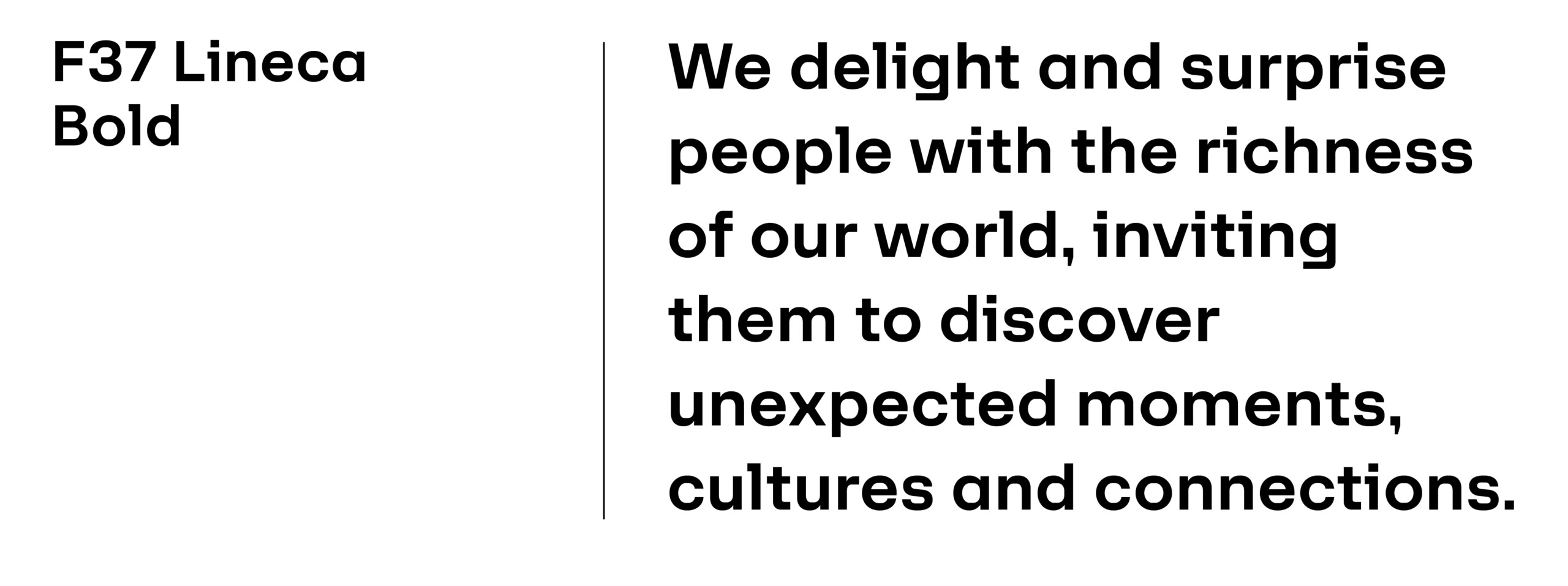
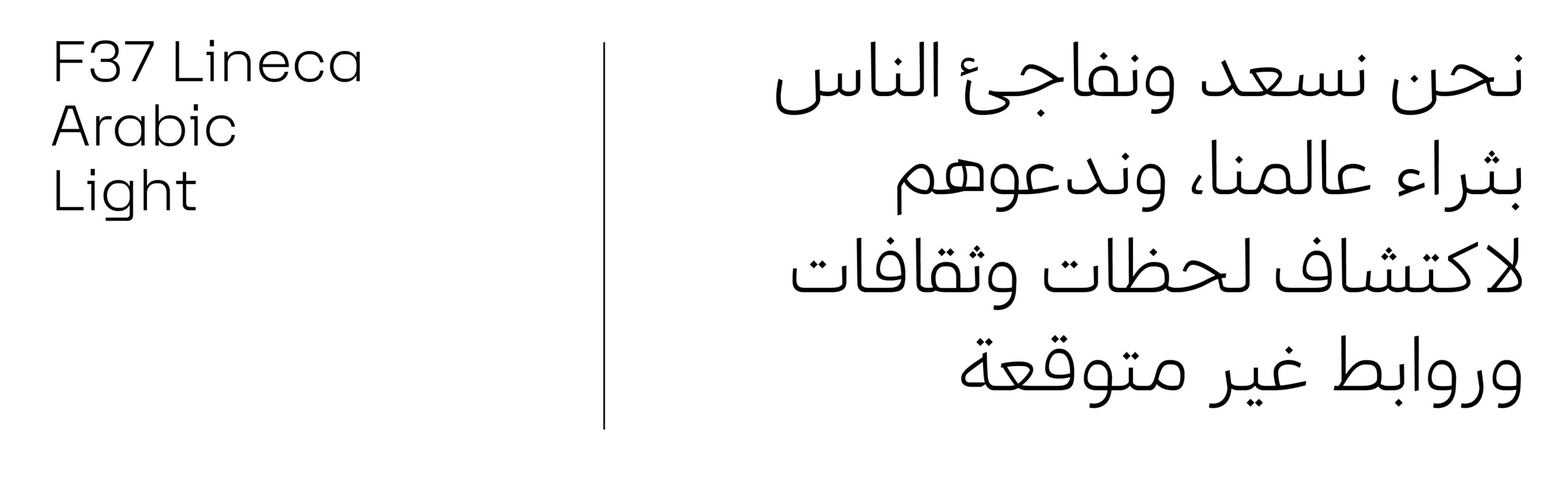
The brand typeface is Lineca from Foundry 37.
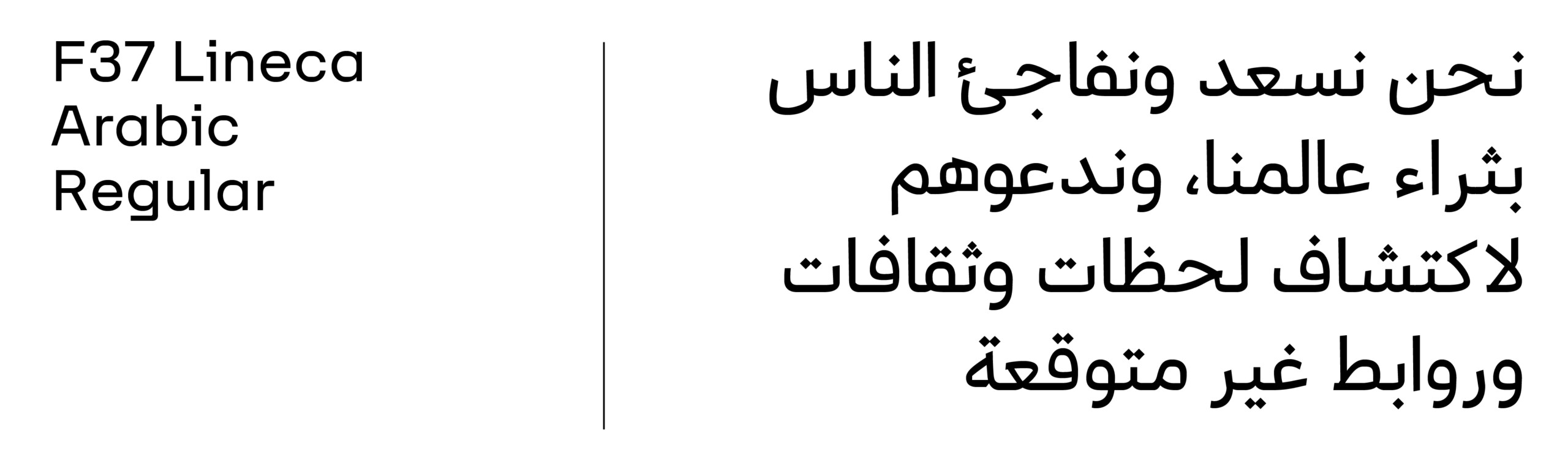
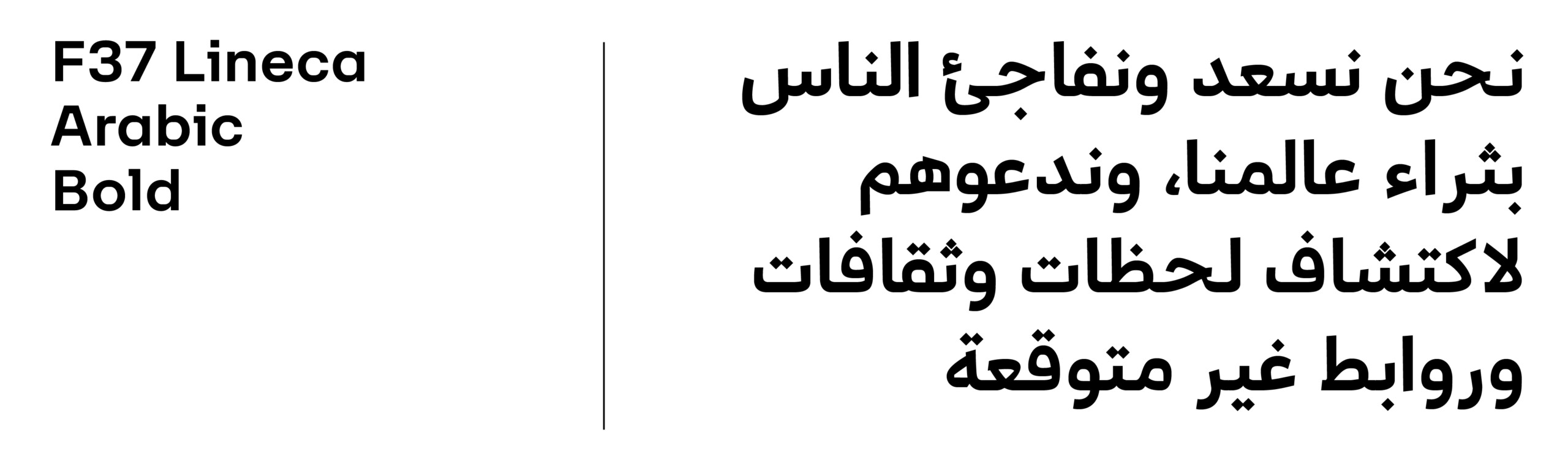
The typeface is available in both native Arabic and Latin characters. We recommend three weights for use across the brand:
F37 Lineca Light
F37 Lineca Regular
F37 Lineca Bold
Typography should always be implemented in a clean and structured manner. Particular attention should be given to the weights used for body copy and headlines.
We recommend Regular weight is used for body copy – with Bold and Light as complementary weights to be used as required to highlight or denote additional information.
Latin typeface: F37 Lineca
Arabic typeface: F37 Lineca Arabic
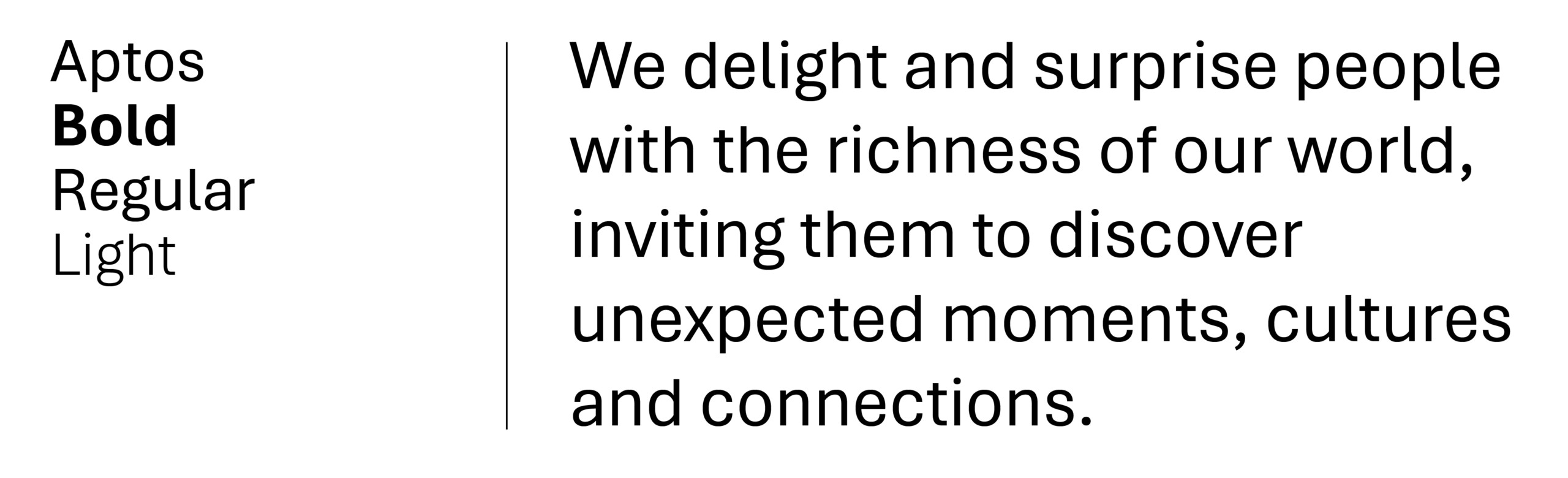
Websafe type
Typography rules
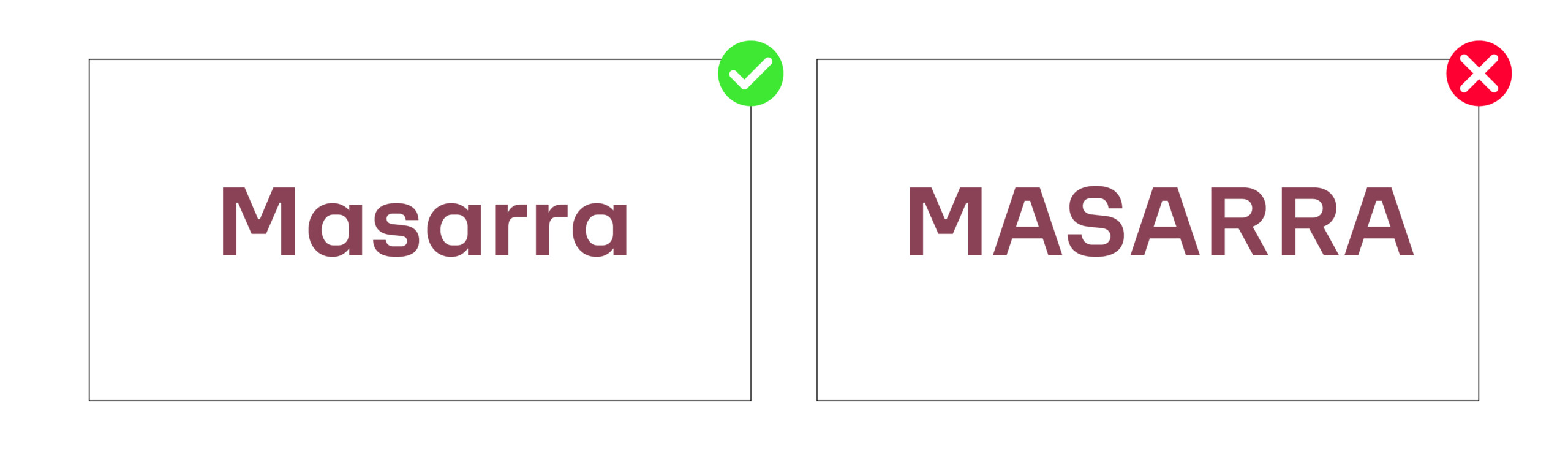
Typing Masarra
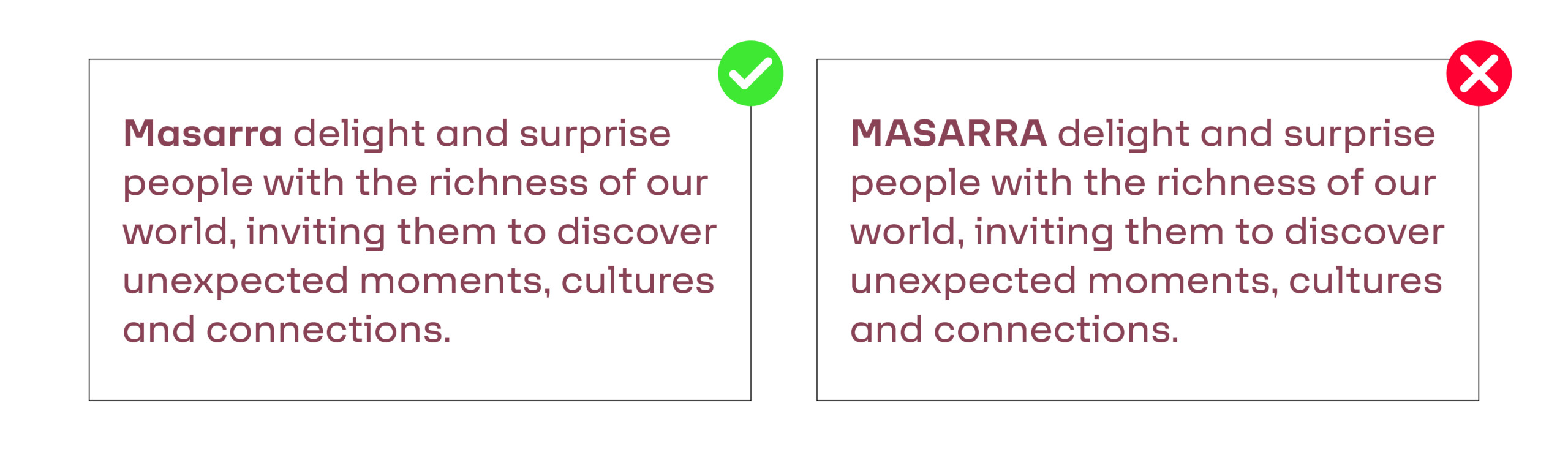
It is important to remember that always type Masarra in sentence case (Uppercase ‘M’, lowercase ‘asarra’), across all applications to create consistency across all mediums and platforms. The primary reasons for this is:
1. Sentence case is easier to read overall.
2. Maintaining consistency between brandmark word mark and how Masarra is written in body copy and headlines.
Typography alignment
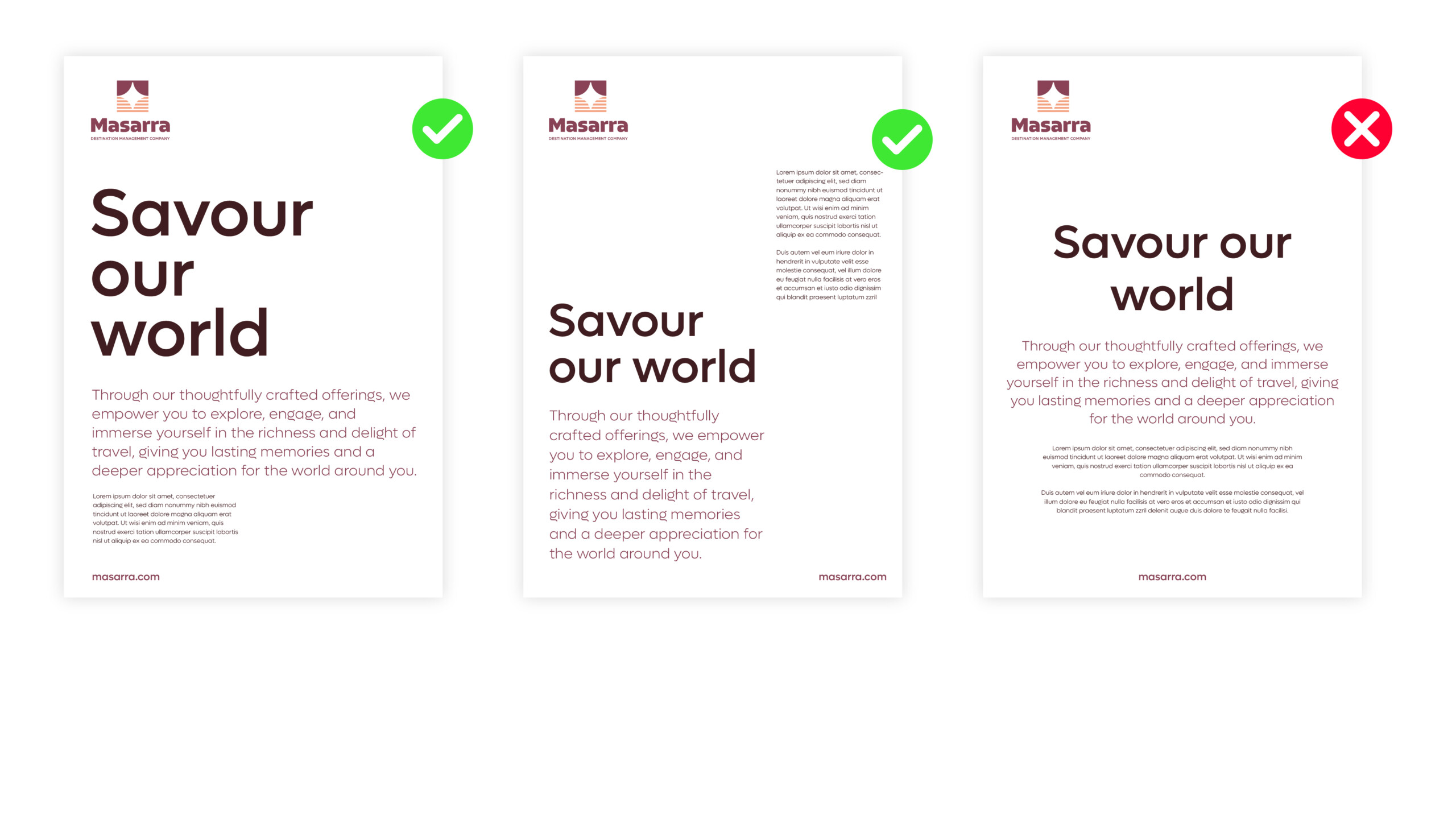
We recommend typography is always aligned left whenever feasible. This ensures a consistent look throughout all applications and adopting an inherent design integrity across layouts for both digital and print.
Graphic device
Pattern of light
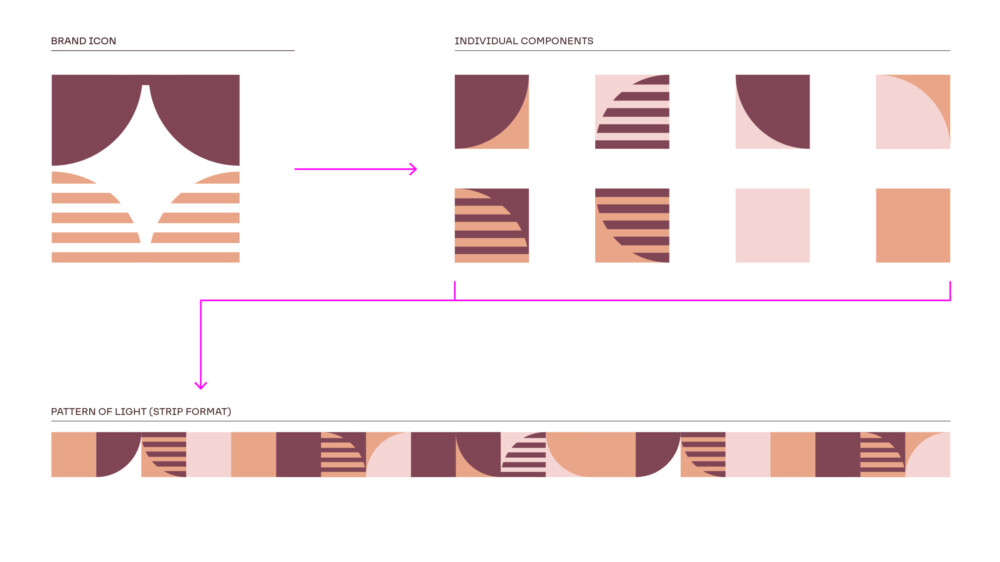
Our Masarra pattern of light is a sparkling expression of the multi-faceted nature of our promise and the experiences we aim to deliver.
It is an extension of the Masarra Guiding Star logo’s graphic style, evoking our visual branding, and reminding viewers that we are richly textured, dynamic and varied as a new destination management company.
Below is an overview of how the pattern of light can be implemented across the brand.
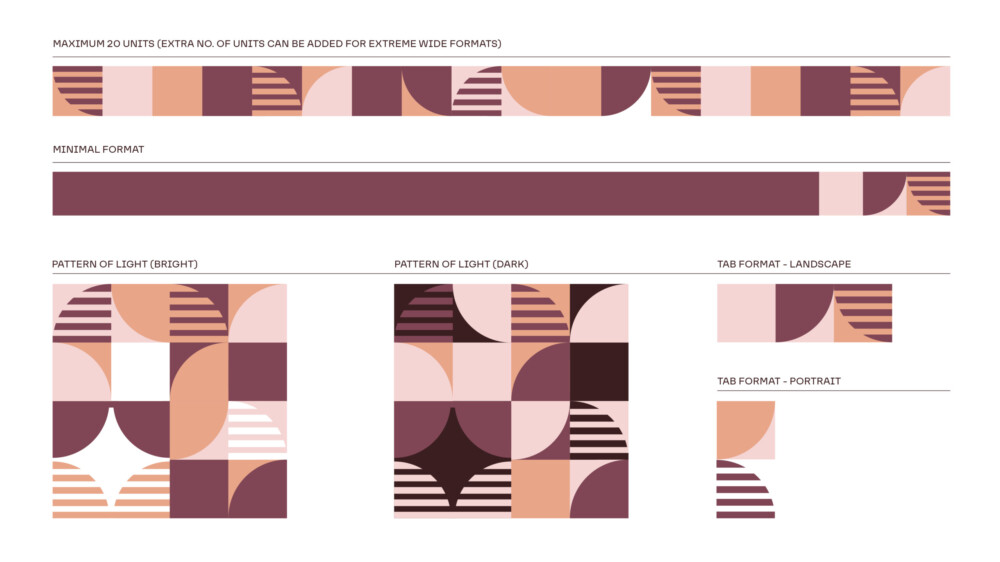
The pattern of light exists as four different variants;
1. Strip format
2. Minimal strip format
3. Pattern texture format
4. Tab format
Pattern usage overview:
Strip format
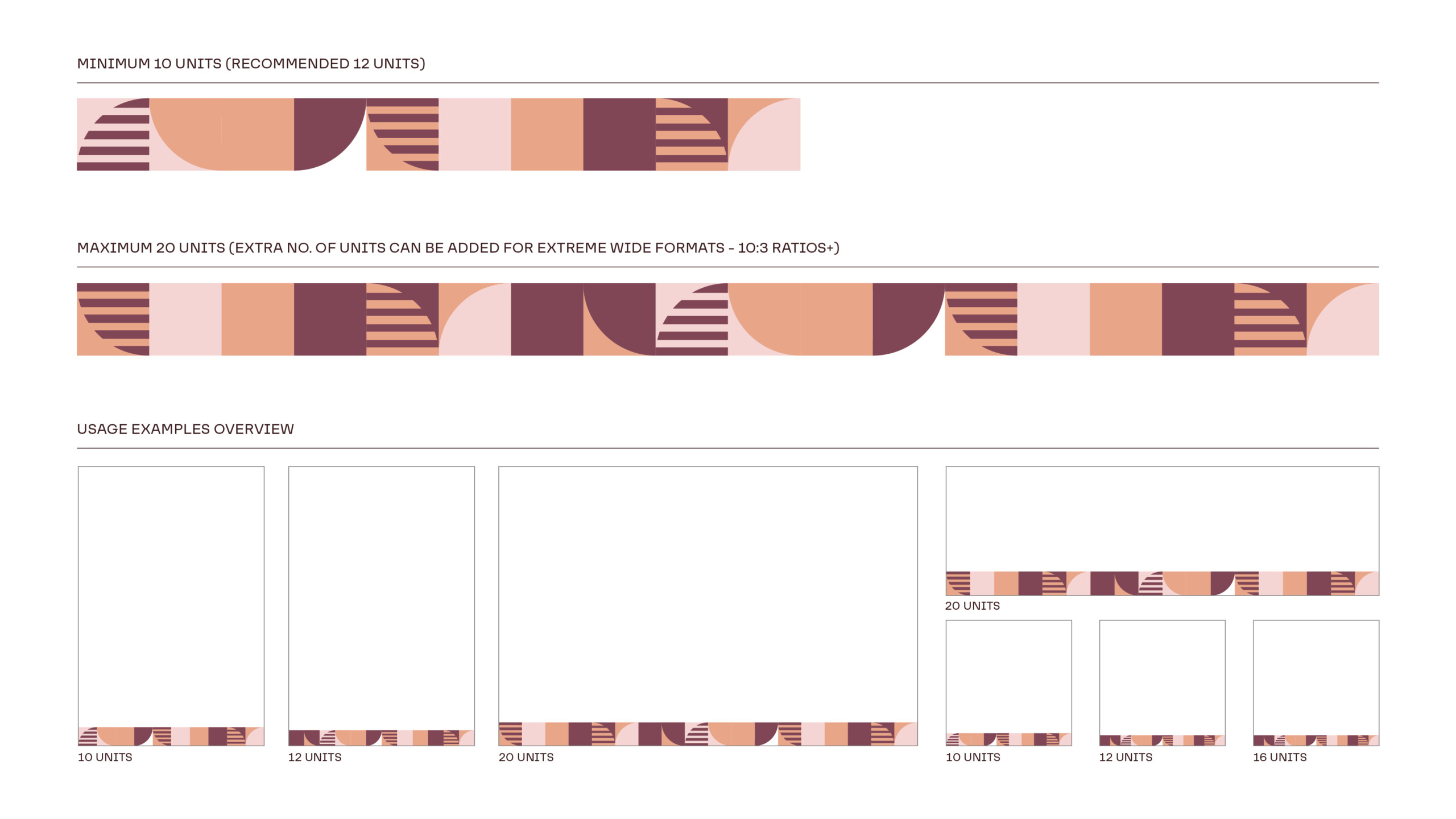
The pattern can manifest in a modular way, always built of square units – from extended lengths composed of 20 units and more, to shorter formats composed of 10 units or less. The length used can vary based on the ratio of the media the pattern is applied to. Each square is a section of colour or pattern that takes inference from our logo.
As a guiding principle the pattern should not become any more 20% of the overall visual execution across the brand on a global level. This does not mean the brand texture can’t be a dominant component on an individual stand alone component across a range of marketing material.
Please always use only the pattern combinations provided, and be discerning in their deployments. They are intended to be evocative and not overwhelming, and must not be overused as wallpapering or in taking precedence over communication messaging and our primary branding.
Additional usage guides:
1. It is recommended that the strip format always runs full width.
2. The strip format should be no less than 10 units across standard format applications.
3. The strip format should be no longer the 20 units wide across standard format applications.
4. Always crop the strip to a whole unit, and NEVER half crop a square unit. Re-size the strip as a whole to ensure this works.
5. The strip format can be less than 10 units or more than 20 units for non-standard applications (extreme portrait and extreme landscape formats).
6. The strip format should always be aligned to the bottom of the canvas.
Strip format usage for extreme formats
The following is a guide to implementing the strip format for extreme sizes in portrait and landscape. These guides specifically apply to applications where the proportions are unusually wide or tall.
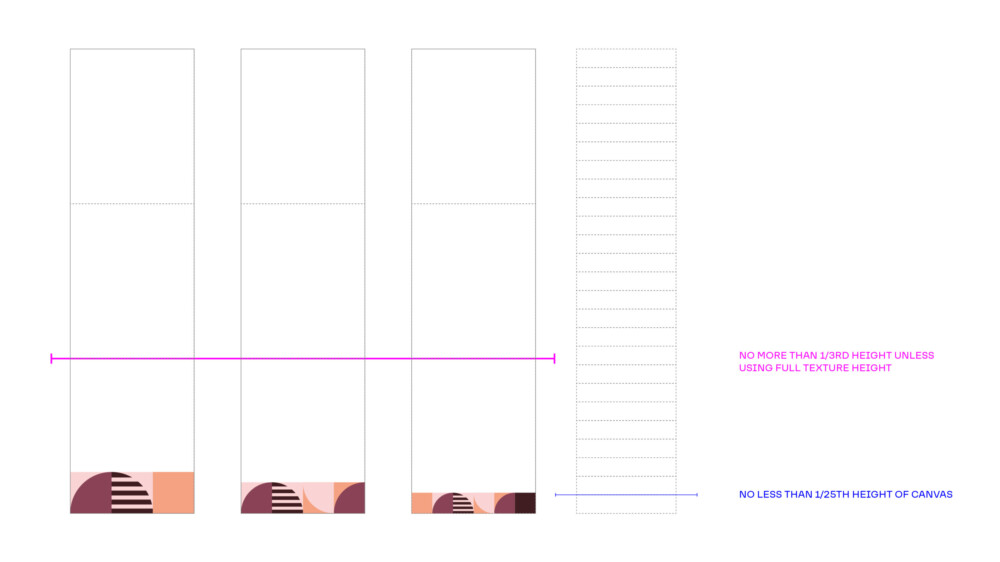
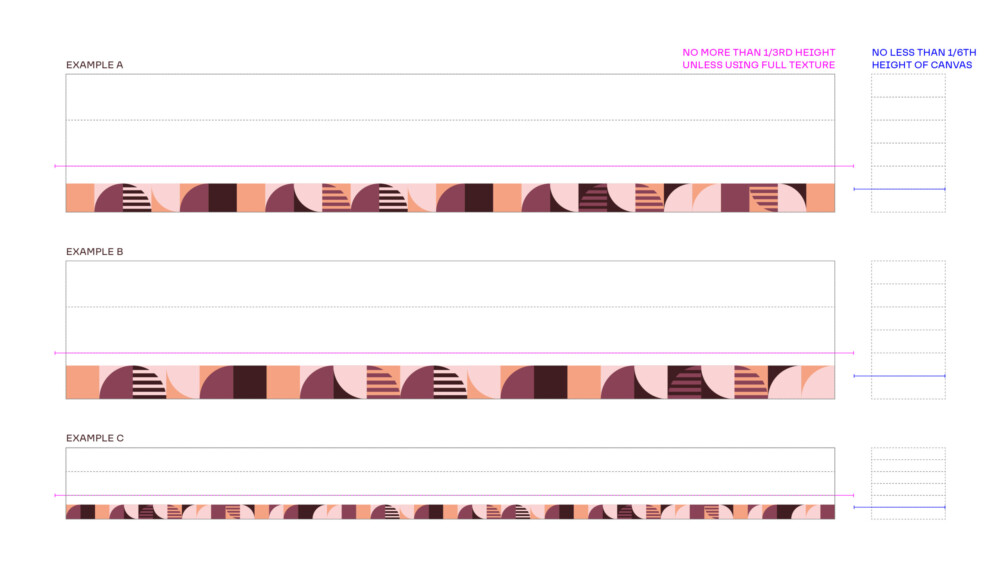
As a guide these rules apply to formats that have a ratio that are greater than 2:5 for portrait applications, and greater than 5:1 for landscape applications.
Extreme portrait guides
The following applies to substrate ratios that are greater than 2:5
- Strip pattern should be no less than 3 units
- Strip pattern should be no less than 1/25th of the height of the substrate the pattern is applied to
Extreme landscape rules
The following applies to substrates greater than 5:1 for landscape applications
- Strip pattern should be no less than 1/6th of the height of the substrate the pattern is applied to
Pattern of light usage guide:
Minimal strip format
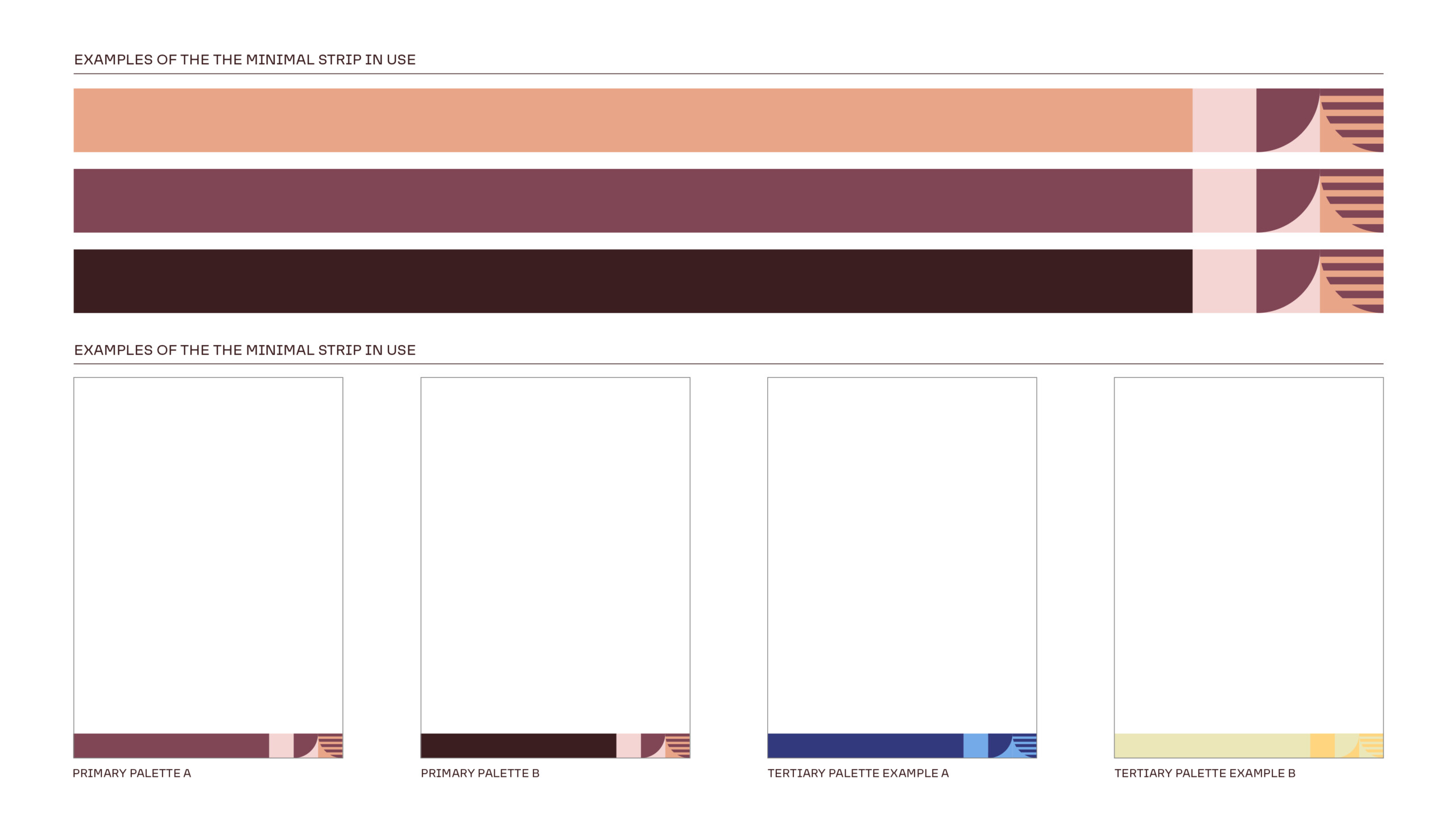
The minimal strip is a version of the pattern strip that utilises less units from the pattern. This version can be implemented when applications require a more subtle approach or there is a requirement to hold additional information within the pattern strip – such as logos, URLs or other tertiary level information.
The minimal strip is composed of three units and can both extend or reduce based on the media size or application. some basic guides to implementing across the entirety of the brand.
Guiding principles
- Three units should always be used.
- The flowing strip colour can inherit any of the brand colours – including a white coloured strip.
- The flat colour strip can hold tertiary information as needed.
- The units should always be aligned right, with the colour banding strip extending to the edge of the canvas.
- The tertiary palette of the brand can be implemented across the strip as required.
Pattern of light texture overview
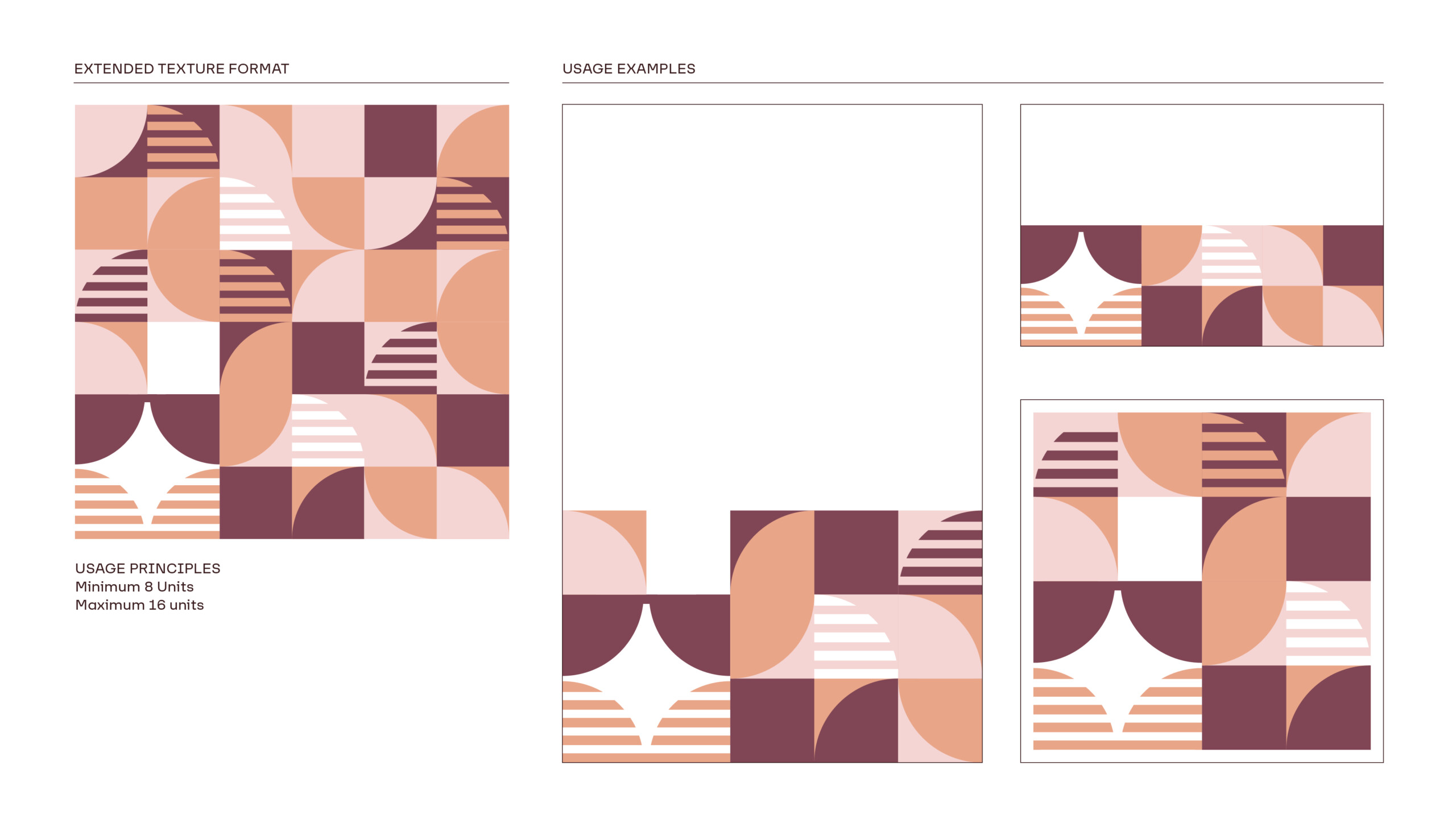
The pattern of light is available as full height texture. This should be used sparingly and never become a dominant component of the over-arching brand.
Usage examples.
- Pattern used as the inside texture of an envelope.
- A break page within a document to break up vast pages/screens of content. As guide around 5% of pages may feature the texture as a full height pattern or a more dominant application of the pattern.
- A texture wall within a branded space, again being used no more than 5% of the overall visual style
Basic rules
- When cropping the pattern, ensure entire blocks/units are visible as a whole across a substrate.
- Ensure the texture is made of a minimum of 8 units units in total. This can be cropped both horizontally or vertically dependant on the canvas proportions.
- Ensure the texture is no more than 16 units in total.
- Texture can be cropped in any ratio format to fit within a specific space.
- Ensure the pattern of light texture overall is not too small nor too big. Please check the applications to judge what size you need size the texture at.
- Texture should be implemented either at full height across a substrate OR for cover no more than 1/2 height of the canvas it is applied to.
Graphic device
Masarra lens
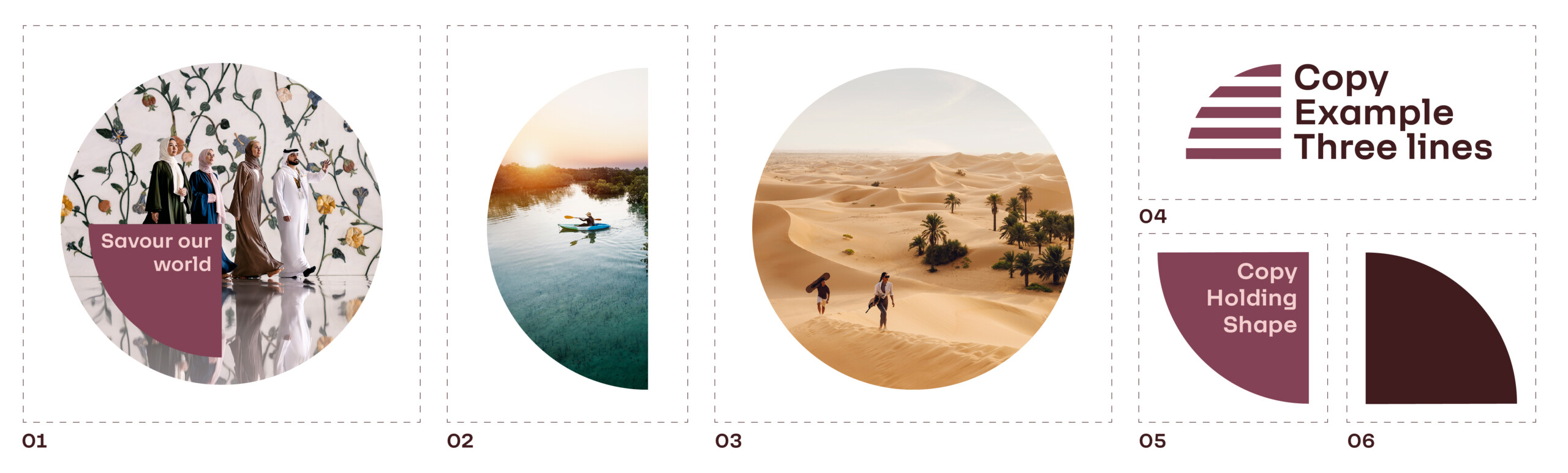
The following is a breakdown of the Masarra Lens graphic device. The Masarra Lens is a secondary component of the brand visual language and plays an integral role across the brand.
The graphic component can be utilised in a variety of situations and is flexible on how it can be applied.
The Masarra Lens is available in a number of different formats:
- Full circle
- Half Circle
- Quarter Circle
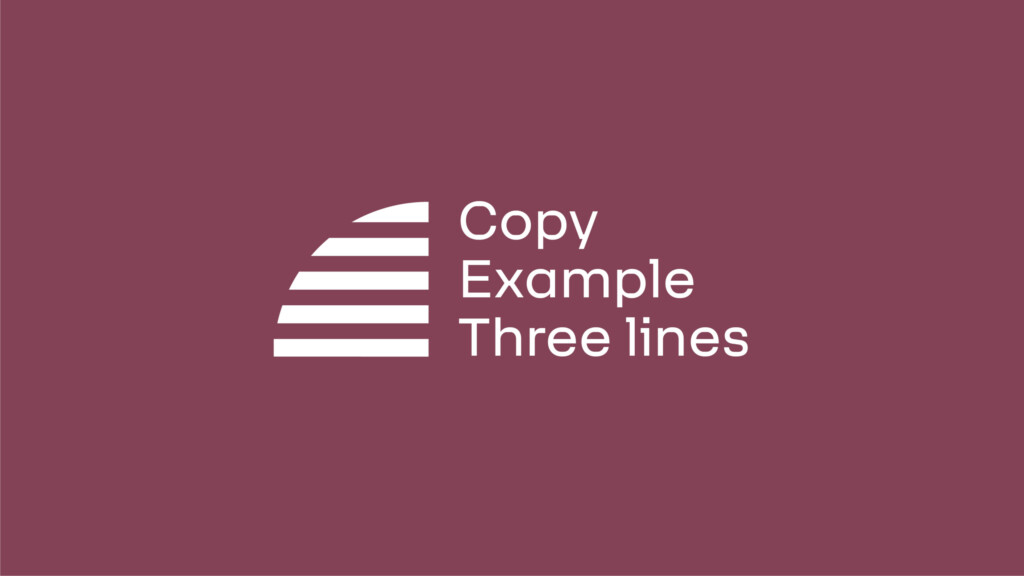
- Quarter Circle (Slatted lines)
These can also be used at 180 degree rotations for the Half Circle, and 90 degree rotations for both the Quarter Circles.
Masarra lens: Full circle
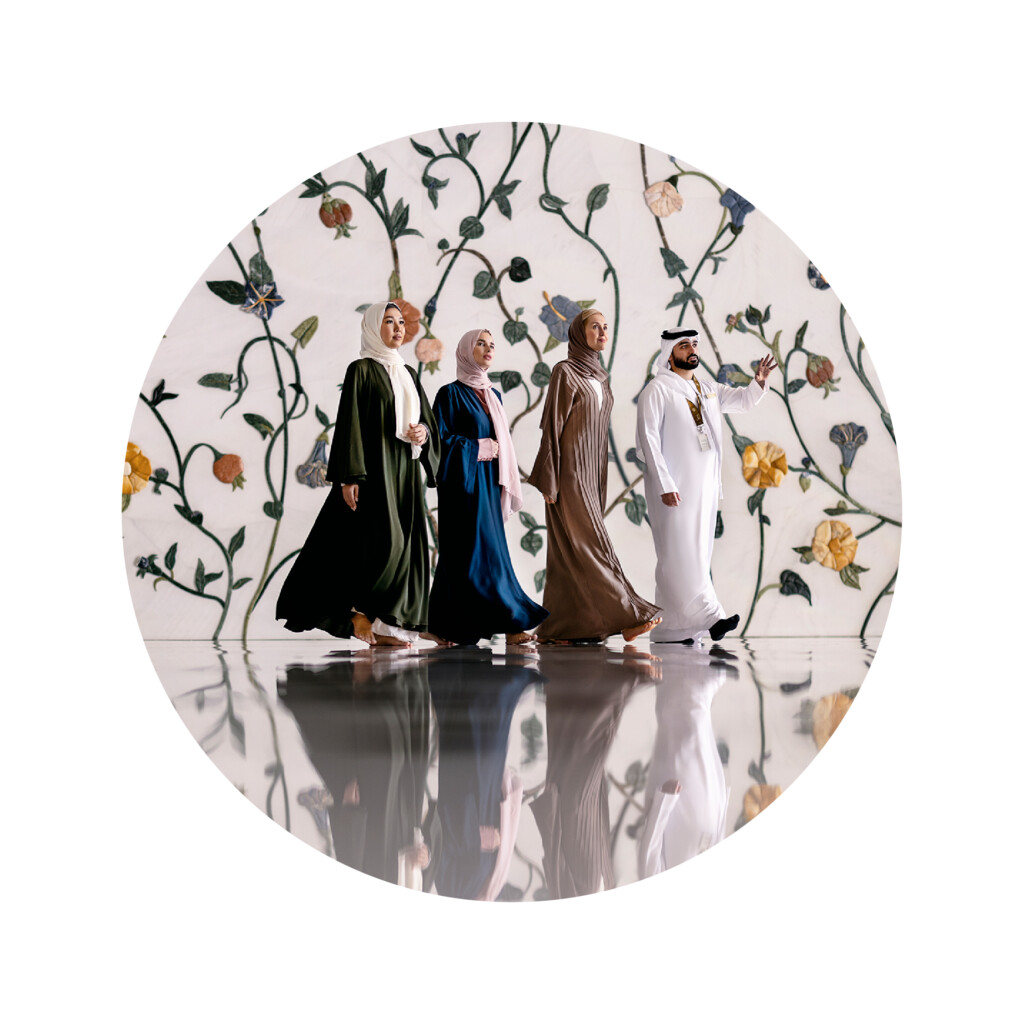
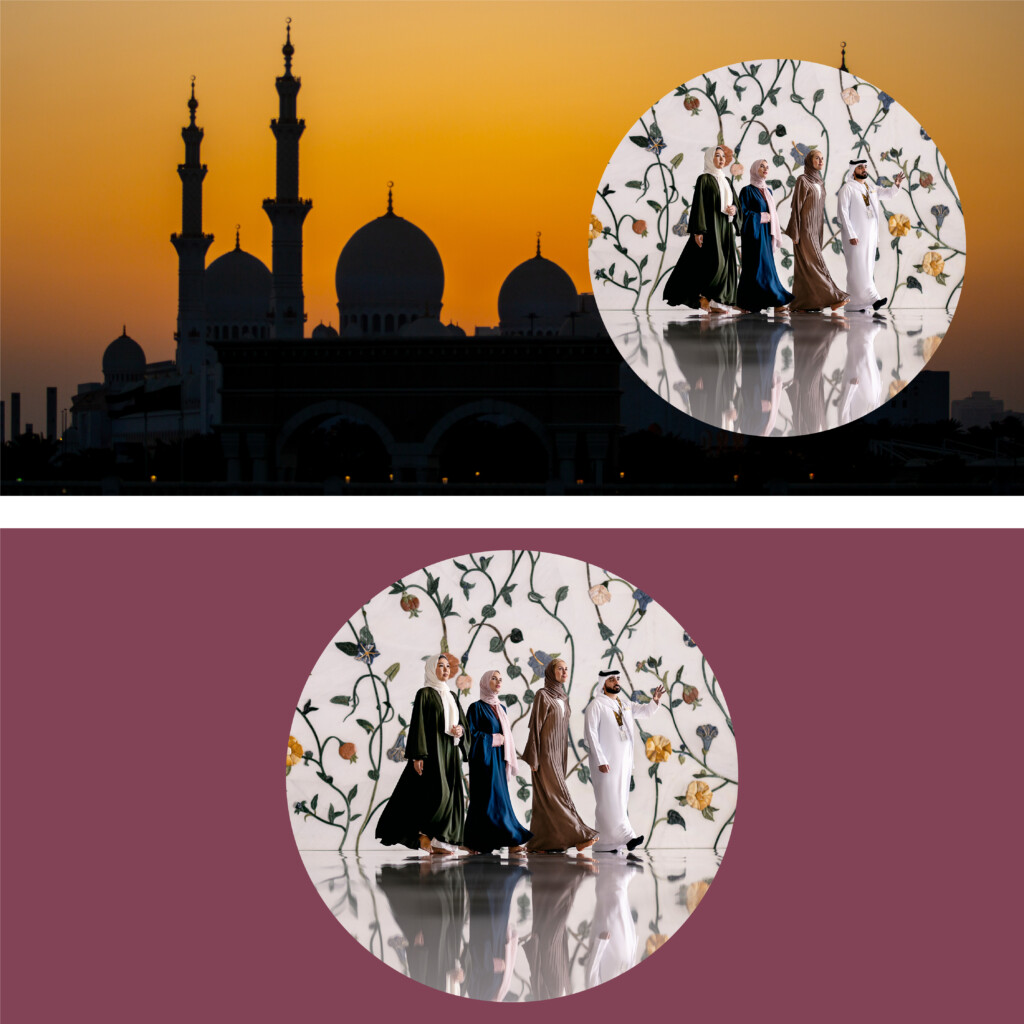
The full circle version of the Masarra Lens can be used as a framing and masking device for imagery and typography as required across all marketing collateral across all print and digital communication.
The full circle version can be utilised across imagery or in combination with the the half circle version only as per the examples shown further down.

Masarra Lens: Full circle
Masarra Lens: Full circle image mask
Masarra Lens: Implementation examples
Masarra lens: Half circle
The half circle version of the Masarra Lens can be used in the same manner as the full circle version, primarily as a framing and masking device for imagery and typography.
The half circle version can be used independently as an individual component or in combination with the full circle version as per examples shown below.
The half circle can be combined with the full circle to mask the same image, or to mask different images or to hold a fill colour – and can also be used with copy if required.

Masarra Lens: Half circle - Left
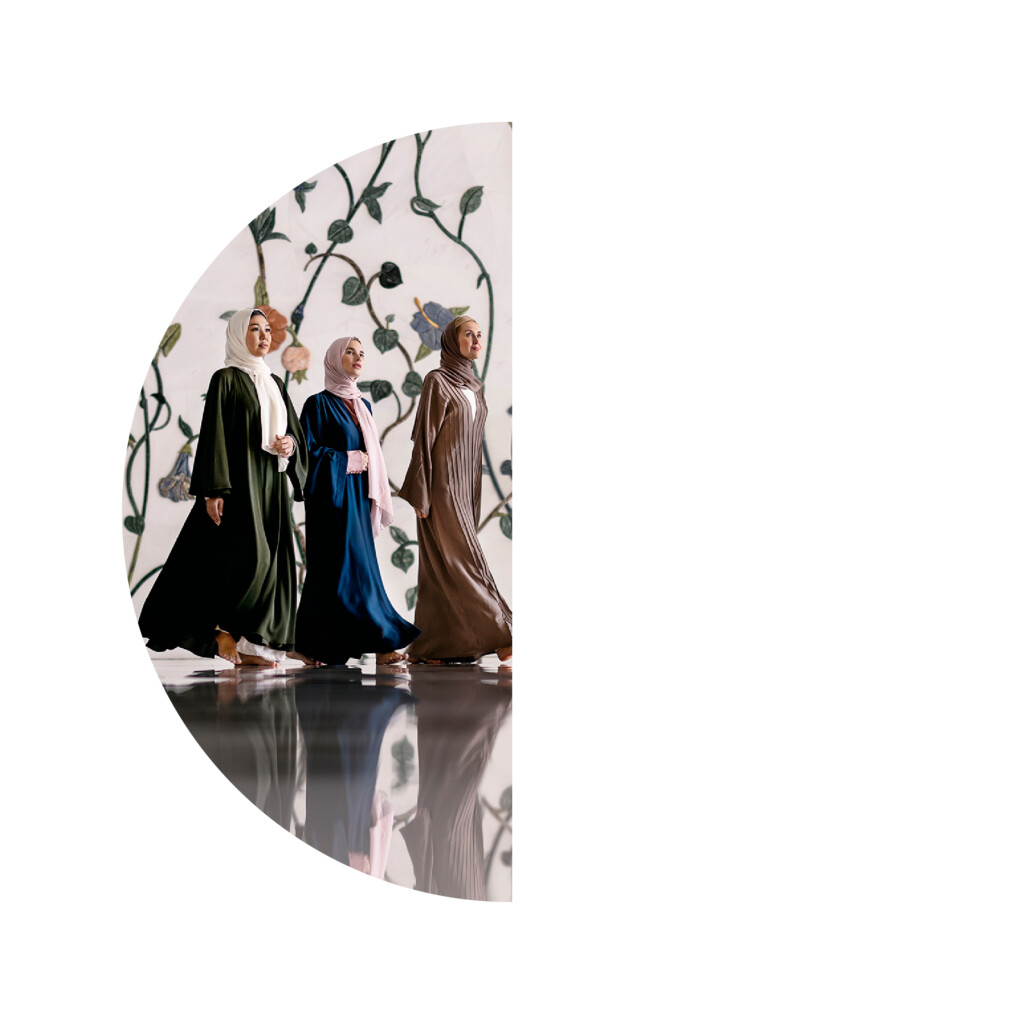
Masarra Lens: Half circle - Left
Image mask

Masarra Lens: Half circle - Right
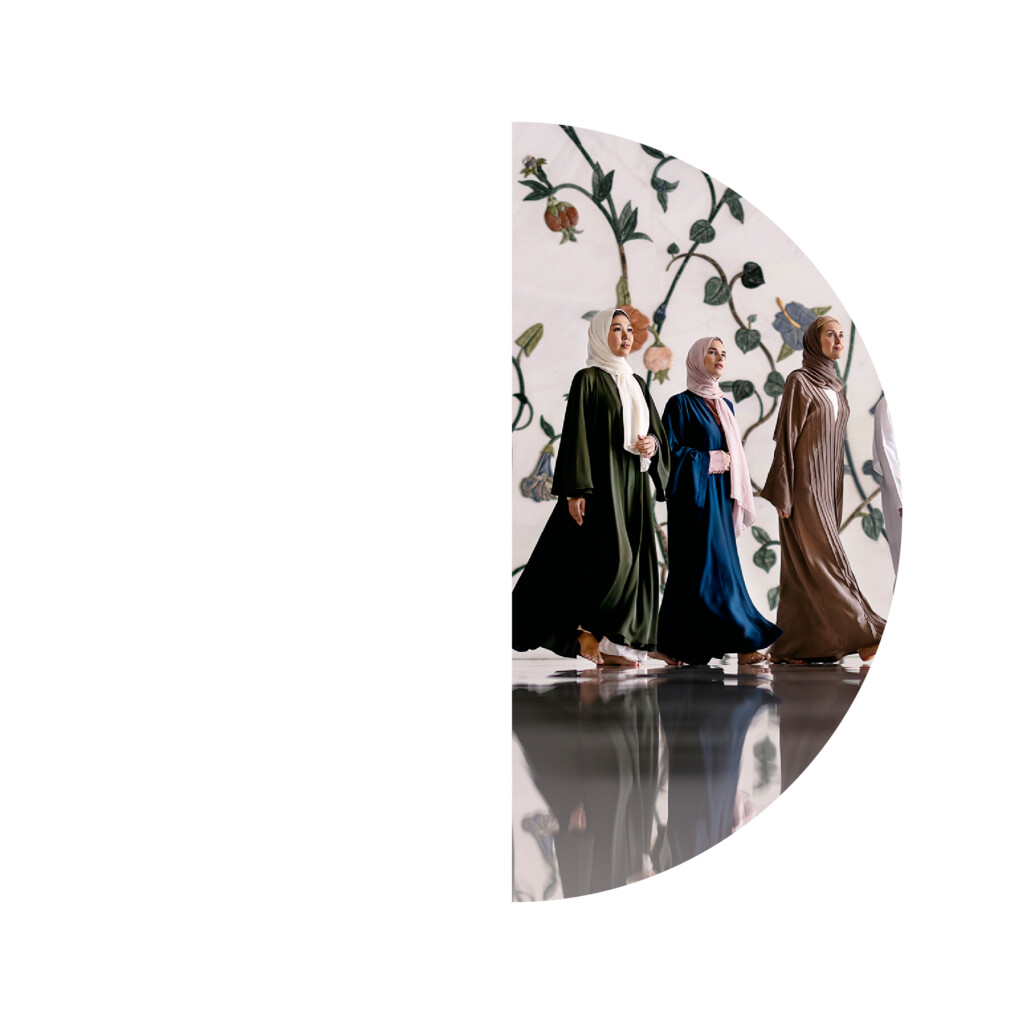
Masarra Lens: Half circle - Right
Image mask
Half circle usage examples
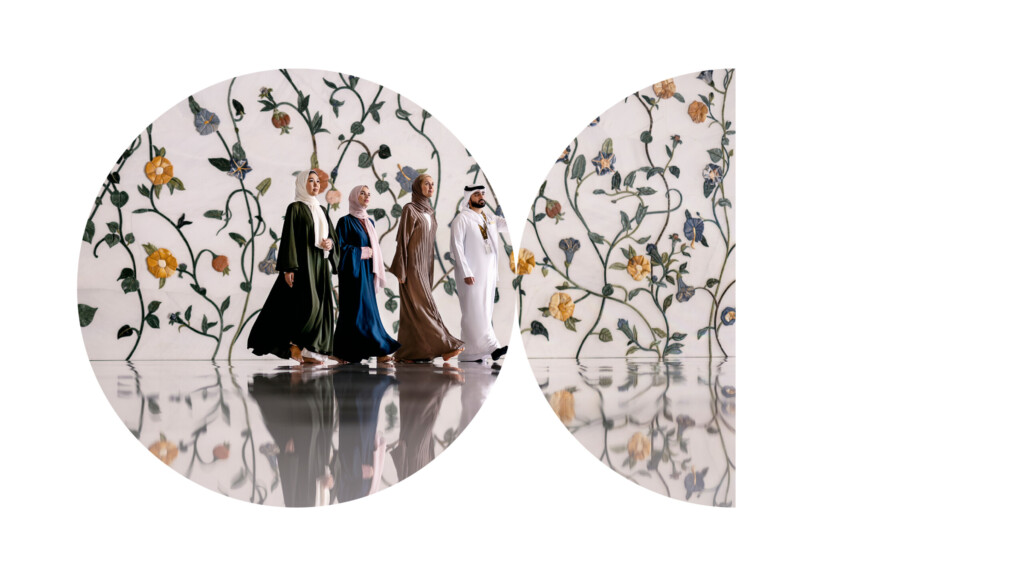
Masarra Lens:
Full circle + half circle image mask
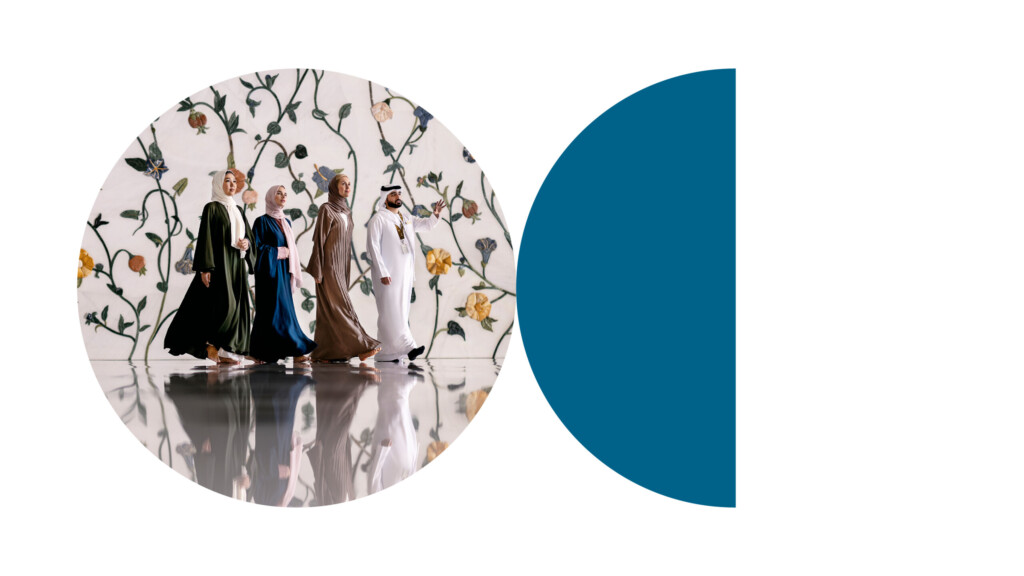
Masarra Lens:
Full circle image mask + half circle colour block

Masarra Lens:
Full circle image mask + half circle image mask
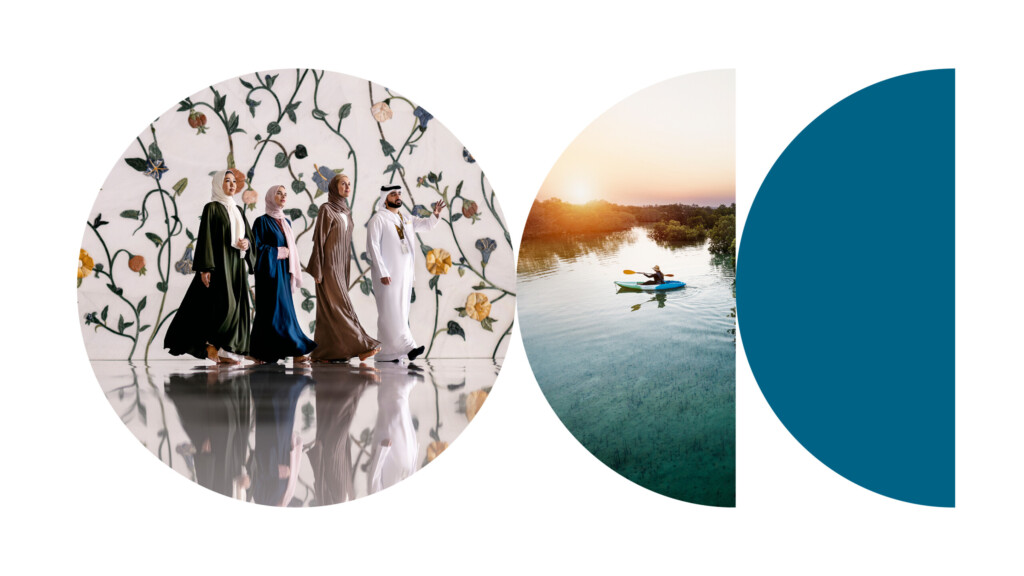
Masarra Lens:
Full circle image mask + half circle image mask + half circle colour block
Masarra lens: Quarter circle
The quarter circle version of the Masarra Lens has a few distinct differences in how the component functions within the brand language.
The primary use for the quarter circle version of Masarra Lens should primarily be as a component to highlight copy based information – such as title or heading or an important piece of information.
The quarter circle can be used at any 90 degree angle to hold information, or as a device to lockup information.
The quarter circle is available in two distinct versions:
Masarra Quarter Lens Solid: Holds copy
Masarra Quarter Lens Slatted: Highlights copy
The quarter lens can adopt any of the brand colours that work cohesively with the overall marketing collateral the quarter circle is featured in.
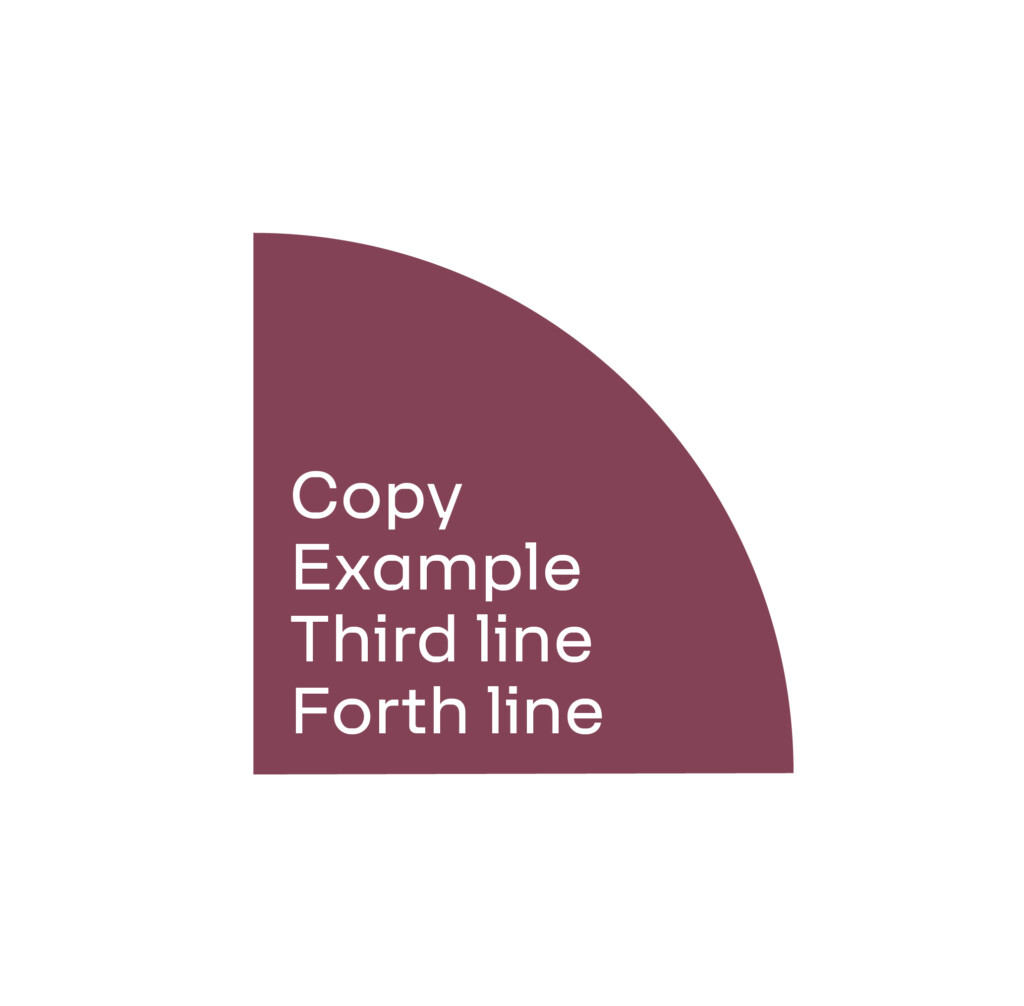
Masarra Quarter Lens Solid:
Latin copy

Masarra Quarter Lens Solid:
Arabic copy
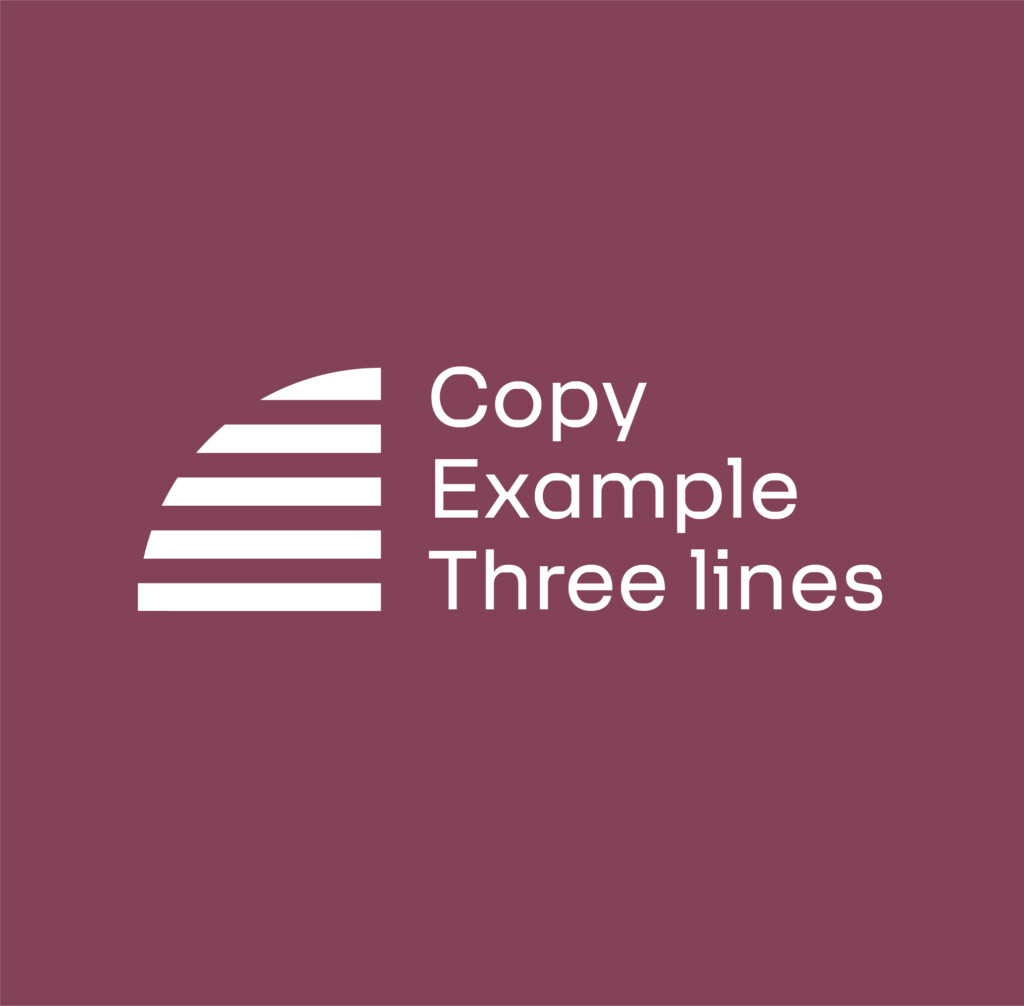
Masarra Quarter Lens Slatted:
Latin copy
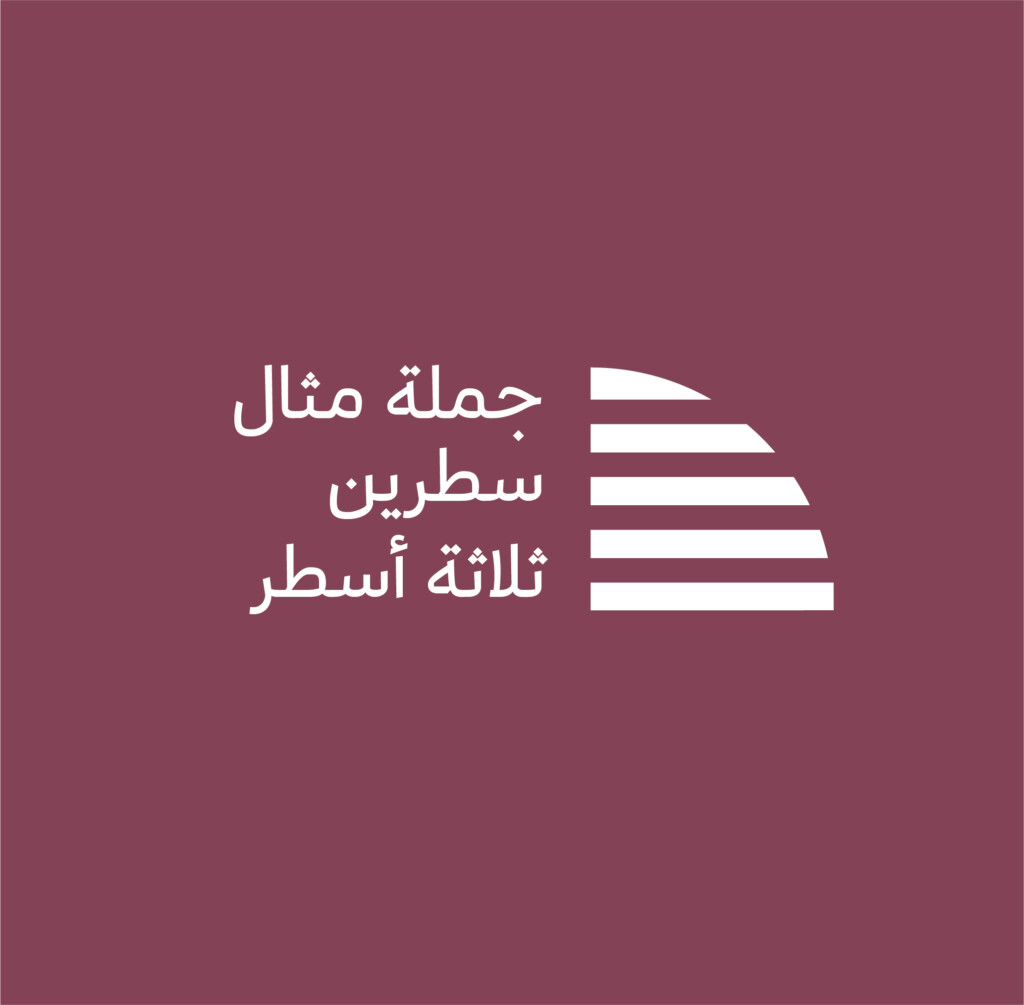
Masarra Quarter Lens Slatted:
Arabic copy
Masarra solid quarter lens: Usage examples
The following are a selection of examples on how to implement the quarter circle version of the Masarra Lens. The quarter circle version can be used both independently in a layout or in combination with the full circle version.
The quarter circle can adopt any of the brand colours are deemed necessary to further complement the overall composition of marketing collateral.
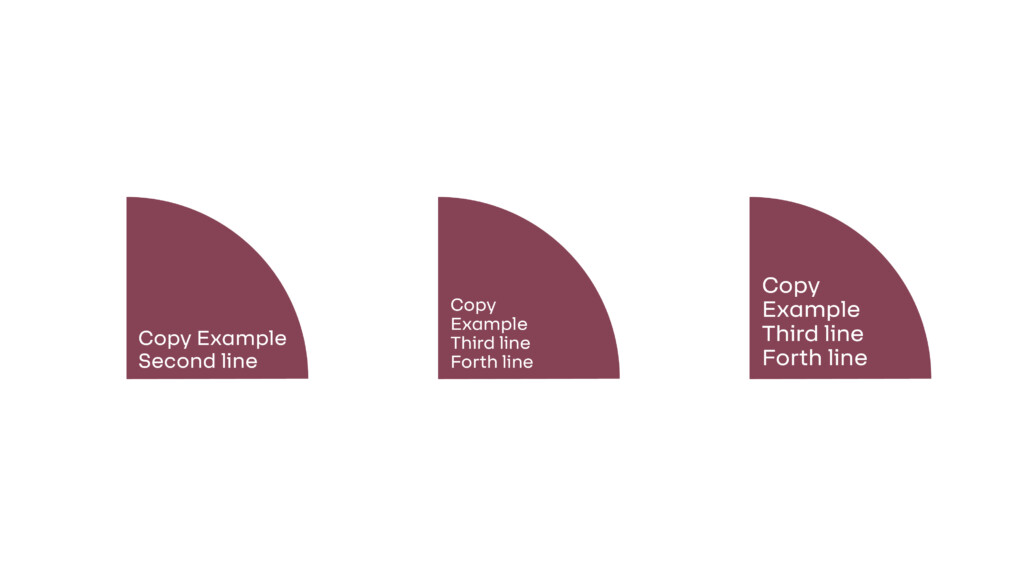
Independent use with copy
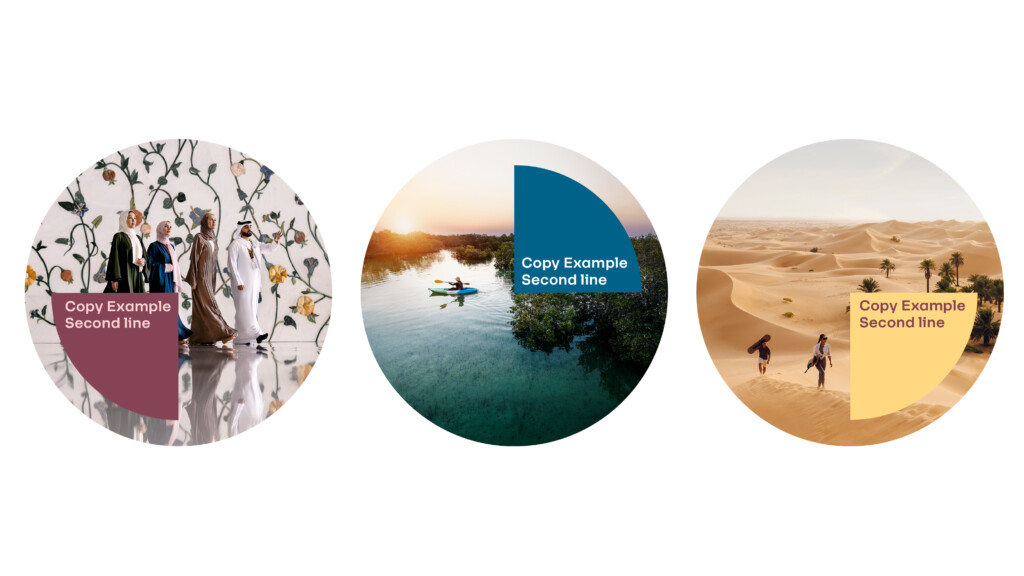
Integrated use with full circle Masarra Lens
Masarra slatted quarter lens: Usage examples
The following are examples of how the slatted quarter circle can utilised in conjunction with copy, to highlight a particular piece of information, or hold multiple items of information – such as a team member names or selection of options for a particular subject matter.